Testing page for app
-
 The standard for progress in shale development has been the drastic reduction in the number of days needed to drill a well, from more than 20 to less than 5 in some unconventional plays. But some question whether it has become a misleading metric for an industry needing more productive wells.
 -
Q&A to discuss heavy oil production and some of the challenges of working in harsh environments.
-
The only wells that are straight or follow a smooth curve are in the pictures in well plans. Real wellbores are shaped by the mechanics of directional drilling tools, the skills and attention of drillers, the force of gravity, and the path followed by hydrocarbon-rich seams of rock.
-
Rising demand for flowback technologies to reduce uncertainties is leading to the creation of more hydrocarbon and water tracers. These chemical-based tracers may play an important role in the shale industry’s effort to come up with more cost-effective fracture designs.
-
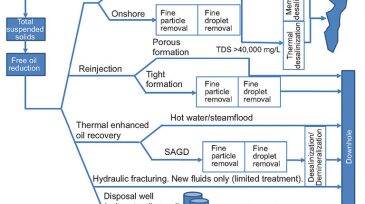
Produced water has become the largest byproduct in the oil and gas industry. Treatment and disposal or reuse of this byproduct requires a good understanding of conditions and options to devise the optimal strategy.
-
On the far end of the flowback spectrum is a completion process called soakback. If the well has to be shut in until takeaway capacity is available, the completion fluids soak into the shale rock. Flowback analysis can help understand what happens in the formation.
-
The need for cost and capital efficiency calls for careful integration of technical and commercial elements.
-
This paper provides a retrospective assessment of the Barnett and Eagle Ford Shale plays to highlight lessons learned and the associated value of those learnings.
-
This paper will examine ways in which Chance of Development (CoD) can be defined better, methods for its estimation, and its appropriate application along with common misuses.