


If you had walked past the SPE secretariat at Obafemi Awolowo University (OAU) on a Friday night, you probably would have thought five students were preparing for the toughest exam of their lives. Well, in a way, we were. There would be notebooks scattered across the table, copies of the Petroleum Engineering Handbook lying open, someone trying to explain a drilling concept, another person arguing about reservoir engineering, and someone else already asking, “Can we just do one last round of questions before we call it a night?” The funny thing is that “one last round” almost never meant one last round. Before we knew it, it would be 2 a.m., then 3 a.m., and sometimes sunrise. We would pack our bags, head back to our hostels, catch a few hours of sleep, and continue with lectures like nothing had happened the night before.
Our team was made up of five students from OAU: Oladunjoye Oluwanifemi Victoria (team captain), Amoo Covenant Omobolanle, Quadri Quadri Adekunle, Folusho Mercy, Ajayi Taiwo Mary.
Whenever people hear that four of us studied chemical engineering, the next question is usually, “So why PetroBowl?” The answer is actually simple. Long before we decided to compete, we had all fallen in love with the petroleum industry.
Being active members of the SPE OAU Student Chapter exposed us to a side of engineering that went beyond lecture theaters and examinations. Through technical sessions, conferences, industry talks, and conversations with professionals, we began to understand that engineering is not just about what you are taught in school. It is also about curiosity, willingness to learn, asking questions, and preparing yourself for opportunities before they come.
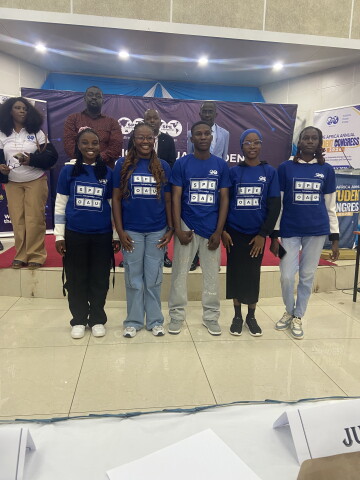
PetroBowl became one of those opportunities. It wasn’t just another competition, it was a chance to challenge ourselves, learn beyond our curriculum, and measure ourselves against some of the brightest students across Africa. The interesting thing is that none of this happened overnight.
The year before, OAU had won the SPE Africa PetroBowl Regional Competition. It was an incredible achievement, but there was also disappointment. Although the team qualified for the international competition, travel challenges meant they couldn’t proceed. This time around, only one member of that team returned, who now became the team captain. That meant we were starting again with a new team, new dynamics, and new expectations.
The pressure was intense. Everyone expected OAU to perform well again. Deep down, we expected the same from ourselves. There were days we wondered whether we were doing enough and there were days we questioned ourselves after difficult practice sessions. But we kept reminding ourselves of one thing: if it had been done before, then it could be done again.
One thing that really helped us was understanding that we didn’t all have to be good at exactly the same things. Instead of trying to master everything individually, we leaned into our strengths. Some members naturally enjoyed drilling engineering. Others spent more time on production, reservoir engineering, HSE, project management, or SPE history. As final-year students, some of us even found ourselves reading topics closely related to our research projects, so we used that to strengthen the team.
Whenever one person understood something particularly well, the rest of us benefited. Our study sessions slowly became less about individual performance and more about collective growth. If one person didn’t understand a concept, we all stayed with it until everyone did. That made a huge difference. Of course, it wasn’t always smooth. People sometimes imagine that successful teams never disagree. That’s not true. There were days we got frustrated, days someone felt another person wasn’t putting in enough effort, days we were simply tired, not tired enough to quit but tired enough to wonder whether all the late nights were worth it.

We talked through those moments. Sometimes the conversations were uncomfortable, but they always reminded us that we all wanted the same thing. The goal was bigger than any disagreement. One setback earlier in the year hit us particularly hard. After putting in so much work, things didn’t go the way we expected.
For a while, it honestly felt like all the hours of preparation had counted for nothing. Nobody said they wanted to quit but everyone was disappointed. Looking back now, I think that setback helped us more than we realized. It forced us to stop, reflect, and ask ourselves difficult questions. Were we studying the right way? Were we practicing enough? Were we relying too much on what we already knew?
Instead of allowing that disappointment to define us, we changed our approach. We became even more intentional. Friday night meetings became non-negotiable. From 7 p.m. until the following morning, we would stay in the secretariat reading, asking questions, and testing one another. There was no shortcut, There was no magic formula: just consistency.
Preparing for PetroBowl also meant learning beyond our classrooms. We read technical handbooks, followed industry trends, stayed updated on developments in the energy sector and constantly challenged one another with practice questions.
We also explored AI tools to explain concepts, generate revision questions, and identify weak areas. But one thing we agreed on very early was that AI could never replace understanding. It only helped us learn more efficiently. Every answer still had to be checked against trusted technical resources.
As the competition drew closer, another challenge appeared: funding. Traveling to Nairobi wasn’t something we could do without support, so we reached out to people and organizations who believed in what we were trying to achieve. Their encouragement reminded us that this journey was bigger than just the five of us. By the time we finally boarded the plane, we carried not only our own expectations but also the hopes of everyone who had invested in us.
Walking into the competition venue in Nairobi is a moment I’ll never forget, I looked around and saw brilliant teams from different African countries. For the first time in a long while, I felt genuinely nervous, and when I looked around, I could tell my teammates were nervous too. Nobody needed to say it. You could see it.
Question after question, round after round, we kept going. And before we knew it, we had done it again. Winning in Nairobi was an unforgettable moment. We proved to ourselves that consistency, teamwork, and resilience really do matter.
When people congratulate us today, they see the medal, the pictures, and the trophy. What they don’t see are the Friday and Saturday nights, They don’t see the disagreements that taught us how to communicate better or the disappointment that forced us to improve. Those are the moments that really built this team.

PetroBowl gave us a title, but it also gave us something much more valuable. It taught us that engineering is a team sport. It taught us that leadership is more about serving than giving instructions. It taught us that asking for help is not a weakness. And it reminded us that some of the most rewarding opportunities begin when you’re willing to learn beyond what is required of you.
Years from now, the trophy will probably sit on a shelf at the secretariat. But I don’t think that’s what any of us will remember first. We’ll remember the laughter during overnight study sessions, the arguments over technical questions, praying together before walking into the competition hall, and we’ll remember five students who simply decided to keep showing up for one another.
In the end, that’s what really won PetroBowl for us. It wasn’t one brilliant answer or one perfect performance. It was the hundreds of ordinary moments that nobody saw, quietly preparing us for the one moment that everyone did.
