

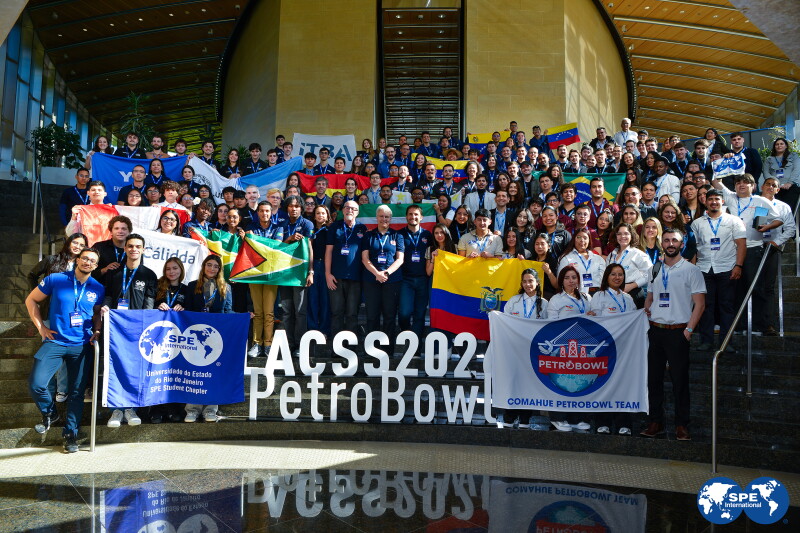
It was really something special to see so many people come together in Buenos Aires for the 2026 Latin America and Caribbean Student Symposium (LACSS) held 14–16 May.
Students, young professionals, academics, and industry leaders all gathered in one place for what’s become one of the most important energy-focused student events in the region. Organized by the SPE, the symposium turned into a true meeting point, where future energy professionals from across the region could learn, grow, connect, and start finding their own paths as leaders.
This year’s edition was packed. There was a professional panel, technical visits to YPF’s Real-Time Intelligence Centers, the Regional PetroBowl Championship, the Regional Student Paper Contest, and even a technical tour of the YPF refinery in La Plata. In total, participants came from 30 universities across nine countries: Argentina, Brazil, Bolivia, Peru, Venezuela, Ecuador, Colombia, Suriname, and Guyana. Quite a crowd.

A Collaborative Regional Effort
One of the most striking aspects of LACSS 2026 was the close cooperation among volunteers, universities, and industry partners. Volunteers traveled from different countries to work alongside their Argentine peers in supporting the symposium. At the same time, YPF stepped in as a key sponsor, covering the venue, meals, audiovisual equipment, photography, video coverage, and on-site operational support.
Visiting YPF’s Real-Time Intelligence Centers
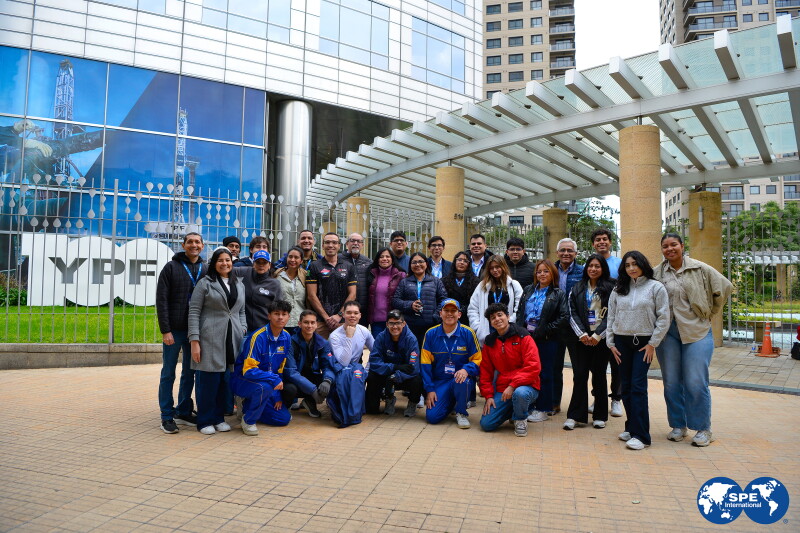
The technical visit to YPF’s Real-Time Intelligence Centers was an important moment from the event. There, students got to see firsthand how real-time data, digital tools, and integrated operating systems help optimize production and support smarter decisions.
They learned how engineers and specialists work together using advanced monitoring systems to improve operational performance in a safe and efficient manner.
PetroBowl: Competition and Teamwork
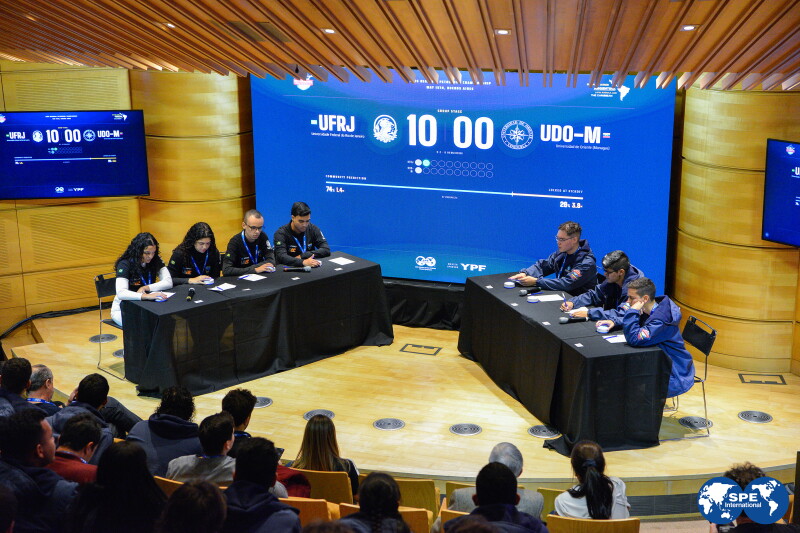
The Regional PetroBowl Championship was one of the most exciting moments of LACSS 2026, with 21 teams from eight countries competing head-to-head. The competition tested students on topics ranging from petroleum engineering and geoscience to energy transition and sustainability. But beyond technical knowledge, PetroBowl also helped participants build communication skills, strategic thinking, confidence, and the ability to perform under pressure.
That's why PetroBowl remains one of the most valuable SPE student activities: it blends academic excellence with teamwork and leadership development, preparing students for the collaborative environments they will encounter in their future careers.
Regional Student Paper Contest
Offering an opportunity into research and technical talent coming up from universities across Latin America and the Caribbean the Regional Student Paper Contest was another key highlight of LACSS 2026. Participants presented 23 papers in total, 16 at the undergraduate level, four at the master's level, and three doctoral research presentations.
The topics covered broad variety of energy industry concerns, from operational optimization and sustainability to digital technologies and engineering innovation.
The contest offered students a valuable opportunity to show their work in front of professors and industry professionals, while receiving constructive technical feedback. Events like the Student Paper Contest do more than encourage innovation, they help students strengthen the technical communication skills that will serve them well as future engineers and researchers in a global industry.

Technical Excursion to the YPF Refinery in La Plata
The LACSS 2026 symposium ended with a technical visit to the YPF refinery in La Plata, one of Argentina's most important refining facilities. Students learned about refining operations, industrial processes, safety systems, and large-scale operational management, getting a deeper understanding of the complexity of refining and its continued role within integrated energy systems.
Strengthening the Future of the Energy Industry
LACSS 2026 demonstrated just how significant it is to invest in students and young professionals across Latin America and the Caribbean. Through technical activities, competitions, research presentations, and networking opportunities, the symposium offered a place for personal and professional growth and, perhaps most importantly, strengthened connections among students from diverse countries and backgrounds, reinforcing the importance of international collaboration in an increasingly global industry.
