

Editor's Note: Bhartendu Bhardwaj is a member of the TWA Editorial Board and a contributing author of previous TWA articles.
In early 2023, India launched what it hoped would become a global energy conversation, the India Energy Week (IEW). The first edition was held in Bengaluru from 6–8 February 2023, bringing together industry leaders, policymakers, and energy stakeholders to discuss not just oil and gas, but the future of energy. The inaugural edition was inaugurated by the Honorable Prime Minister of India, Shri Narendra Modi, under the theme “Growth, Collaboration, Transition,” during India’s G20 Presidency.
The momentum carried forward with the second edition held in Goa in February 2024. This edition expanded the scope and diversity of participation, while the third edition in New Delhi in February 2025 placed IEW on the global energy calendar. Together, these editions marked a clear shift from building scale to shaping substance. Ministers, CEOs, financiers, and technology leaders from across continents converged and the agenda broadened to include renewables, hydrogen, digital energy, and energy finance alongside traditional fuels. India’s energy diplomacy was now unmistakable: the country was no longer a silent consumer of global energy trends, but an active shaper of the dialogue—balancing security, access, and sustainability.
In January 2026, the fourth edition of IEW returned to Goa with participation larger than its earlier incarnations. With 75,000+ professionals, 700+ global exhibitors, 550+ speakers, and representation from over 120 countries, IEW 2026 emerged not just as a marquee Indian event, but as one of the largest global energy summits.
This rise, from a fledgling annual meeting in Bengaluru to a global energy forum in Goa, mirrors India’s own energy journey: rapid industrialization, expanding consumer demand, and a dual challenge of securing affordable supplies while transition ambitions grow. And amid all this, there emerged a clear desire to host the conversations that shape the future of global energy, not just participate in them.
Held under the patronage of the Ministry of Petroleum & Natural Gas, Government of India, and jointly organized by the Federation of Indian Petroleum Industry, and dmg events, IEW was conceived as a platform to bring together policy, industry, and global capital around India’s evolving energy priorities.
Setting the Tone: Inaugural Session
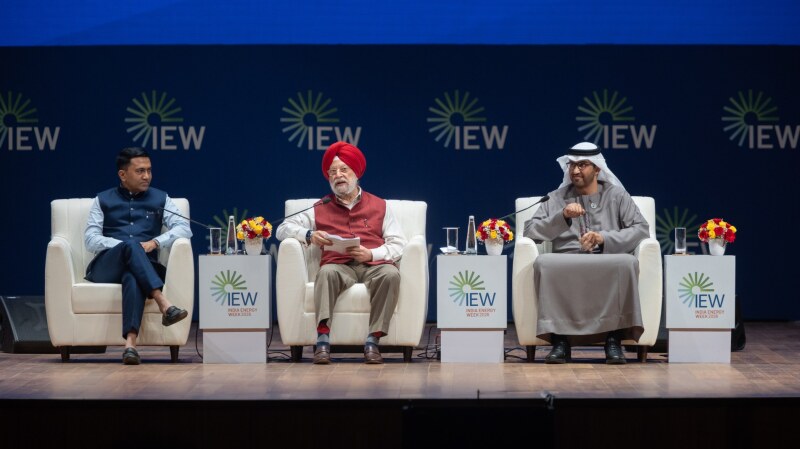
The 2026 event opened with a virtual address by the Honorable Prime Minister of India, Shri Narendra Modi, followed by keynote addresses from the Honorable Minister of Petroleum and Natural Gas of India, Shri Hardeep Singh Puri; His Excellency Sultan Ahmed Al Jaber, Minister of Industry and Advanced Technology of the UAE and Managing Director and Group CEO of ADNOC; and a welcome address by the Honorable Chief Minister of Goa, Shri Pramod Sawant.
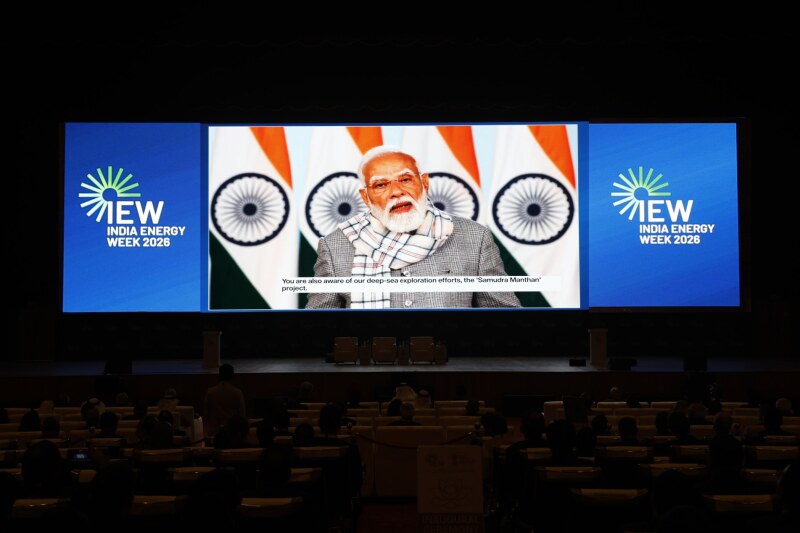
Together, the leadership framed energy not as a debate between hydrocarbons and renewables, but as a problem of balance between security, affordability, and sustainability. The message was unambiguous: India’s energy transition will be pragmatic, investment-led, and firmly anchored in domestic realities. In a world grappling with supply shocks, fragmented markets, and uneven transitions, India positioned itself as a stable anchor open to global capital and partnerships yet focused on ensuring reliable energy access for a growing economy.
Strategic Conference: Shaping Energy Strategy in a Connected World
If the inaugural session defined intent, the strategic and technical conferences together explored consequences and execution. Through ministerial panels, leadership dialogues, energy talks, and focused technical sessions, IEW 2026 examined how energy security, transition pathways, and investment flows are increasingly shaped by global strategic considerations rather than market forces alone.
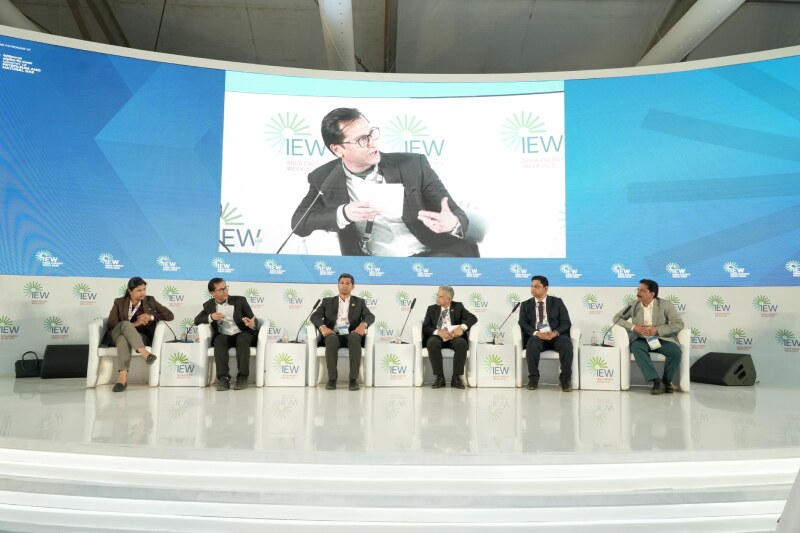
With participation from ministers, policymakers, global CEOs, and technology experts representing over 120 countries, alongside multilateral organizations and global energy institutions, discussions moved beyond announcements to focus on collaboration, resilience, and diversification. The technical program complemented this by translating strategy into practice, featuring hundreds of technical presentations and case studies across upstream and downstream operations; digitalization; hydrogen; carbon capture, utilization, and storage; and sustainable mobility.
What stood out was India’s evolving role. No longer viewed merely as a fast-growing demand center, India emerged as a convenor capable of hosting dialogue across regions, fuel types, and institutional perspectives. Together, the strategic and technical discussions reflected a world where cooperation, credibility, and execution matter as much as ambition or scale.
Exhibition Floor: A Snapshot of Energy Addition
The exhibition halls told their own story. Traditional oil and gas supermajors stood alongside hydrogen developers, biofuel producers, carbon-capture innovators, digital-energy platforms, and nuclear technology providers. Country pavilions showcased not just equipment, but intent, signaling long-term partnerships, supply-chain commitments, and investment pipelines.
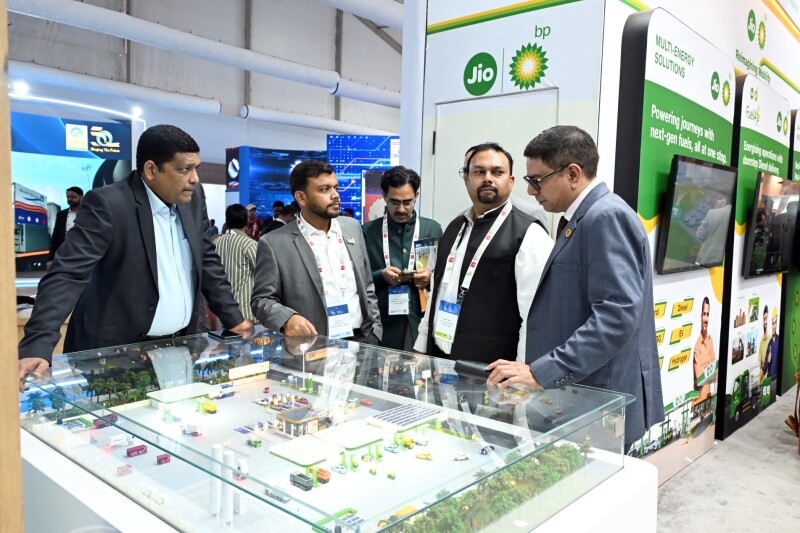
What this diversity revealed was India’s underlying energy philosophy—energy addition, not energy substitution. Clean energy is scaling rapidly, but not at the cost of reliability or affordability. Conventional fuels remain relevant even as newer technologies mature. The exhibition mirrored India’s energy pathway as layered, inclusive, and built for scale rather than disruption.
Beyond Scale: Why IEW 2026 Mattered
By its fourth edition, IEW had moved decisively beyond scale to substance. At a time when global energy systems face volatility, fragmented transitions, and capital uncertainty, IEW emerged as a platform where strategy, execution, and investment alignment converged. India’s position as a fast-growing energy market, a transition testbed, and a partner for scalable solutions placed it at the center of these conversations.
Beyond dialogue, the importance of the event was reflected in a series of announcements and strategic partnerships that accompanied the program. Collaborations spanning conventional energy, low-carbon technologies, hydrogen, digitalization, and capacity building were discussed and advanced across government, industry, and public-private frameworks. While not positioned as a deal-making forum, IEW increasingly functioned as a catalyst where confidence, alignment, and long-term intent were shaped.
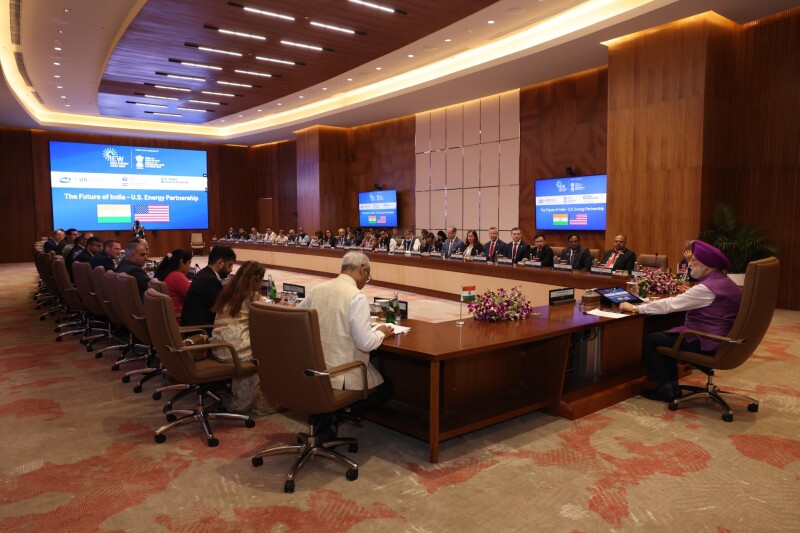
In this sense, IEW is no longer merely showcasing India’s energy journey. It is evolving into a platform where parts of the global energy framework are being debated, influenced, and progressively defined, particularly for economies navigating the complex balance between growth, security, and transition.
Conclusion
At its core, IEW 2026 offered a simple but powerful reminder. The future of energy will not be written by technology alone, nor by policy in isolation. It will be shaped by countries that can balance growth with resilience, ambition with realism, and transition with trust.
Through IEW, India signaled that it intends to be one of those countries, not merely adapting to global energy shifts, but helping define them. If the trajectory of IEW is any indication, the conversations that matter most in the coming decade may increasingly find their way to Indian shores.
