


[Editor's Note: Bright Eyindah Odike is a member of the TWA Editorial Board and the author of previous TWA articles.]
The global energy transition is reshaping the landscape of petroleum financing. Although oil and gas continue to play important roles in global energy security and economic development, climate policies, environmental, social, and governance (ESG) considerations, and changing investor expectations are increasingly influencing how capital is allocated across the petroleum sector. Access to financing has become a critical factor in determining which projects proceed, where they are developed, and the conditions under which investors are willing to commit. This shift is creating a more differentiated investment landscape.
Petroleum resources that once may have attracted capital primarily based on geological potential are now assessed against a broader set of commercial, political, regulatory, and environmental risks. As investors become more selective, capital is likely to concentrate in jurisdictions where projects can be developed competitively, risks can be managed, and long-term returns remain sufficiently attractive. For oil-producing countries, the challenge is no longer limited to discovering and developing hydrocarbon resources; it also lies in creating the conditions needed to attract increasingly selective sources of capital.
This article examines how the petroleum financing landscape is evolving, what this shift means for oil-producing countries, and the measures they can take to remain competitive in the global market for energy investment.
Understanding Petroleum Financing
Petroleum financing refers to the provision of capital by commercial banks, institutional investors, governments, export credit agencies, and other financial institutions to support oil and gas activities through various forms of financing, including loans, equity investments, bonds, and guarantees. Because petroleum project development is highly capital intensive, access to finance is essential across the project life cycle, from exploration and appraisal to field development, production, and associated infrastructure. The availability and terms of financing can influence whether a project reaches a final investment decision and ultimately proceeds to commercial operation.
Petroleum financing also extends beyond the funding of individual projects. Financing decisions reflect investors’ assessments of a company’s financial strength, project economics, regulatory exposure, political risk, and the broader investment environment in which petroleum operations are conducted. Access to capital can serve as an important indicator of investor confidence and affect the ability of oil-producing countries to attract and retain long-term investment.
Despite expanding climate commitments and restrictions on petroleum financing, capital flows to the sector remain substantial. Between 2016 and 2021, the world’s 60 largest private-sector banks provided approximately $4.6 trillion in financing to fossil fuel companies, with about 91% classified as not project-related rather than directly tied to individual projects (Fossil Fuel Finance Report 2022). For oil-producing countries, this distinction is important because it demonstrates that access to finance is not determined solely by the technical and commercial quality of a particular petroleum project. It is also shaped by the financial strength and strategy of the operating company, the policies of financial institutions, and investor perceptions of regulatory, political, environmental, and market risks.
A More Selective Petroleum Financing Landscape
The International Energy Agency (IEA) estimated that global energy investment would reach approximately $3.3 trillion in 2025, with about $2.2 trillion directed toward clean energy technologies and infrastructure and $1.1 trillion toward oil, natural gas, and coal. Although this widening investment gap reflects the growing priority given to cleaner energy systems, the scale of continued spending on fossil fuels demonstrates that petroleum remains an important destination for capital, particularly amid continuing energy demand and concerns about energy security (IEA, 2025). However, climate policies, ESG considerations, and investor expectations are increasingly influencing lending decisions, making access to fossil fuel capital more selective.
Bank-financing trends present a similarly nuanced picture. In 2025, the world’s 65 largest banks provided approximately $906 billion in financing to fossil fuel companies, representing an increase of nearly 8% from the previous year (Fossil Fuel Finance Report 2022). However, the increase in aggregate financing does not indicate that capital is equally accessible to all companies, projects, or producing countries. The report also shows that financing is becoming increasingly concentrated among a smaller group of established borrowers. Petroleum financing can remain substantial while becoming more selective in how and where it is allocated.
For oil-producing countries, the central question is not simply whether petroleum financing remains available, but which countries and projects can secure it and on what terms. The experiences of the US, Guyana, and Nigeria illustrate how these factors can shape the ability of oil-producing countries to attract petroleum investment within the same changing global financing environment.
US: Access to Capital in a Mature Petroleum Market
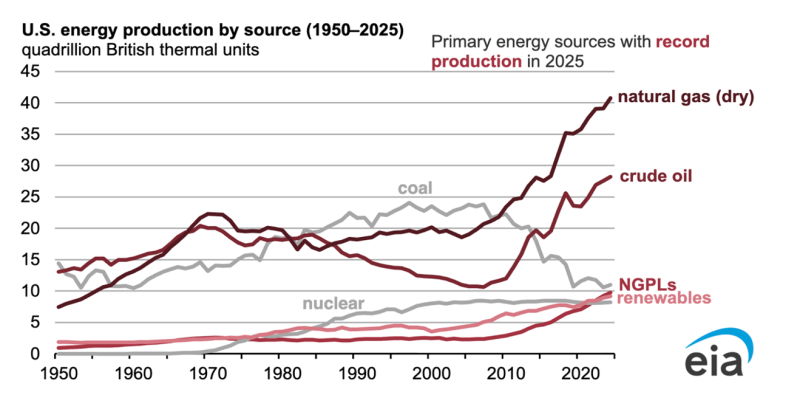
The US is a major petroleum-producing country and the world’s largest producer of crude oil and natural gas. In 2025, US crude oil production averaged a record 13.6 million BPD, while dry natural gas production reached 39 Tcf (Fig.1) (US Energy Information Administration [EIA], 2026). Its large production base, established infrastructure, and deep capital markets make it a mature petroleum market in which financing remains substantial, even as financial institutions adopt increasingly divergent climate and energy policies.
In 2025, the world’s 65 largest banks provided approximately $906 billion in financing to companies engaged in oil, gas, and coal activities, an increase of $64 billion, or nearly 8% from the previous year. US-headquartered banks accounted for more than 32% of global bank fossil fuel financing in the broader data set, the largest share of any financial center. JPMorgan Chase was the largest individual financier, providing approximately $58.2 billion during the year (Fig. 2) (Fossil Fuel Finance Report 2026). Although these figures cover the global activities of fossil fuel companies rather than financing for US petroleum projects alone, they demonstrate the continued importance of US financial institutions in global petroleum capital flows.

Access to capital is reinforced by several structural advantages within the US petroleum market. Producers operate within one of the world’s deepest and most liquid capital markets and can obtain funding through commercial lending, bond issuance, equity investment, private capital, and internally generated cash flows. They also benefit from extensive petroleum infrastructure, established service and supply chains, experienced operators, and a large domestic market. Together, these conditions provide investors with access to established companies, producing assets, infrastructure networks, and multiple pathways for deploying capital.
The fiscal and policy environment can also influence petroleum investment economics. Taken together, these factors reinforce the US' position as a mature petroleum market whose continued access to capital is supported by more than resource availability. Deep capital markets, established companies, developed infrastructure, industry scale, and favorable commercial conditions collectively strengthen investor confidence and reduce financing barriers.
Guyana: Commercial Viability and Investor Confidence
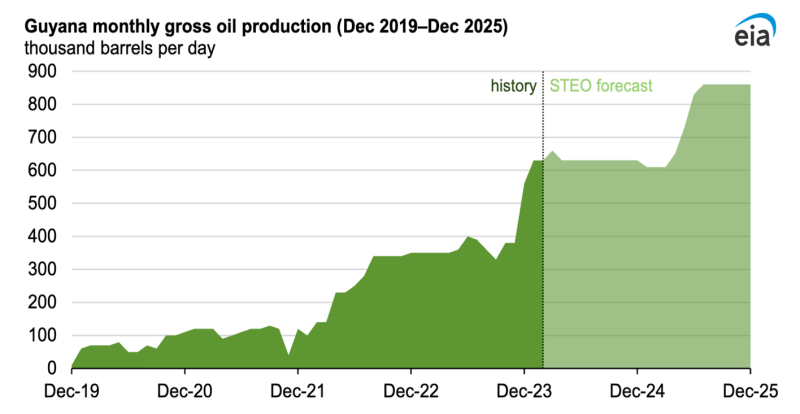
Guyana, situated on South America's northern coast neighboring Venezuela, Suriname, and Brazil, demonstrates how commercially attractive petroleum resources can continue to secure substantial international investment even as global financing becomes more selective. Since production from the offshore Stabroek Block began in 2019, the country’s crude oil output has expanded rapidly (Fig. 3). The EIA estimates that average production increased approximately tenfold between 2020 and 2025, reaching about 750,000 BPD in 2025 (EIA, 2025a). Following the ramp-up of the Yellowtail development, production reached approximately 900,000 BPD in November 2025 (ExxonMobil, 2025a). The Stabroek Block is operated by ExxonMobil in partnership with CNOOC Petroleum Guyana and Chevron, which acquired Hess and its 30% interest in the block in July 2025. Uaru is expected to begin production in 2026, Whiptail in 2027, and Hammerhead in 2029.
Investor confidence is most clearly demonstrated by the repeated approval and financing of these developments. In September 2025, ExxonMobil and its partners made a final investment decision on the $6.8 billion Hammerhead project, the seventh sanctioned development on the Stabroek Block. The decision increased the total capital committed across the seven approved projects to more than $60 billion. These successive investment decisions suggest that the block continues to offer commercially competitive development opportunities supported by large recoverable resources, scalable production infrastructure, experienced international operators, and a clearly defined project pipeline.
Petroleum development has also contributed to Guyana’s broader economic expansion, with real GDP growing by 19.3% in 2025 (World Bank). However, the principal financing lesson is not simply that Guyana possesses substantial petroleum resources. Guyana’s experience shows that resource potential attracts sustained capital when it can be translated into commercially viable projects supported by capable partners, consistent execution, and a credible development pipeline.
Nigeria: Financing the Shift to Indigenous Operators
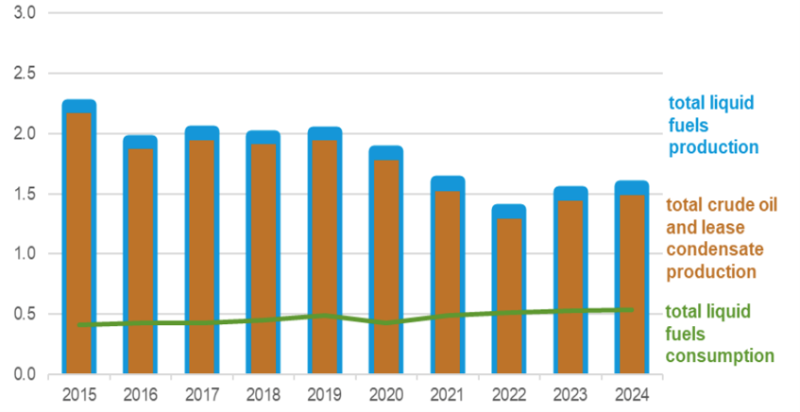
Nigeria is a major petroleum-producing country in West Africa whose oil and gas sector remains an important source of government revenue, export earnings, and foreign exchange. In 2024, the country produced approximately 1.6 million BPD of total liquid fuels, including about 1.5 million BPD of crude oil and lease condensate, while domestic liquid-fuels consumption was approximately 0.5 million BPD. However, crude oil and lease-condensate production remained about 31% below its 2015 average, reflecting the effects of mature fields, aging infrastructure, security-related disruptions, and reduced upstream investment (US EIA, 2025b).
Against this operating and investment background, Nigeria illustrates a different dimension of the changing petroleum-financing landscape. The recent wave of international oil company divestments has significantly altered the ownership structure of Nigeria’s upstream petroleum sector. Between 2024 and 2025, Eni completed the $783 million sale of the Nigerian Agip Oil Company to Oando, Equinor transferred its Nigerian business to Chappal Energies in a transaction valued at up to $1.2 billion, ExxonMobil completed the sale of Mobil Producing Nigeria Unlimited to Seplat Energy, and Shell transferred the Shell Petroleum Development Company of Nigeria to Renaissance Africa Energy. The assets associated with the broader divestment wave are estimated to contain approximately 2.3 billion barrels of recoverable crude oil, making this one of the most significant changes in upstream petroleum ownership in Nigeria’s history (K. Jeremiah, 2025).
These transactions should not be interpreted simply as a wholesale withdrawal of international capital from Nigeria. In several cases, they reflect a reallocation of corporate investment away from mature or operationally challenging assets and toward deepwater, integrated gas, and other projects considered more competitive within global portfolios. Shell, for example, linked its onshore divestment to a strategy of concentrating future investment on deepwater and integrated gas opportunities, while Equinor described its exit as part of the optimization of its international portfolio. Portfolio restructuring, pipeline vandalism, crude-oil theft, aging infrastructure, high operating costs, environmental liabilities, and changing corporate climate strategies have also influenced this shift. Nigeria’s experience demonstrates that petroleum capital can remain available while becoming increasingly selective about the assets, operating environments, and risk profiles it supports.
For the acquiring companies, however, asset ownership creates a substantial financing obligation. Indigenous operators must finance not only the purchase of the assets but also infrastructure rehabilitation, production optimization, security, environmental remediation, decommissioning obligations, and future field development. The ability to meet these obligations may be affected by borrowing costs, access to foreign currency, collateral requirements, security expenditure, and the treatment of legacy environmental and operational liabilities. Nigeria’s upstream regulator has consequently emphasized financial strength, technical capacity, and legal and environmental considerations in its framework for approving petroleum-asset transfers (Nigerian Upstream Petroleum Regulatory Commission, 2024). The transfer of ownership is only the first stage; the long-term value of the assets will depend on whether their new owners can secure sufficient capital to operate, maintain, and further develop them.
New financing arrangements are beginning to address parts of this challenge. In July 2026, Shell Nigeria Exploration and Production Company partnered with nine Nigerian banks to establish a $3 billion Contract Finance Facility for Nigerian contractors executing SNEPCo. The facility offers credit in both Nigerian naira and US dollars and uses awarded contracts and the domiciliation of contract payments to reduce lender risk. Its scope should nevertheless be interpreted carefully: it supports the working-capital and project-execution requirements of indigenous contractors rather than directly financing upstream asset acquisitions or the field-development programs of local operators. Even so, the initiative demonstrates how contract-backed lending, partnerships with domestic banks, and other risk-sharing structures can improve access to capital within Nigeria’s petroleum value chain.
Nigeria’s experience reinforces the central argument of this article. Petroleum financing is not necessarily ending, but it is becoming more selective, risk-sensitive, and dependent on financing structures that provide lenders and investors with greater certainty. For Nigeria, attracting and sustaining capital will require more than transferring assets to domestic companies. It will also require policy and regulatory stability, improved infrastructure security, greater clarity over environmental and decommissioning liabilities, access to affordable long-term finance, and financing arrangements capable of reducing the risks faced by indigenous operators and their lenders.
Conclusion
Petroleum financing remains integral to sustaining oil and gas development, supporting energy security, and converting hydrocarbon resources into productive assets. Yet, the contrasting experiences of the US, Guyana, and Nigeria demonstrate that access to such financing is becoming increasingly selective and uneven. The interaction of commercial, financial, and institutional factors is redefining competitiveness among oil-producing countries. Jurisdictions that combine strong project economics with policy stability, reliable infrastructure, credible institutions, and manageable investment risks are better positioned to secure capital. Those unable to provide these conditions may face higher financing costs, project delays, and declining investor interest, regardless of the scale of their petroleum resources. In response, oil-producing countries should prioritize predictable fiscal and regulatory frameworks, transparent approval processes, infrastructure security, and financing structures that reduce risk for investors and domestic operators. Together, these measures can strengthen investment readiness and help oil-producing countries remain competitive in the global market for energy capital development as the energy transition progresses.

Bright Eyindah Odike, SPE, is a PhD student in chemical engineering and a doctoral researcher in the Mary Kay O’Connor Process Safety Center at Texas A&M University. His current research focuses on exploring coupled physics-based and deep learning frameworks for safety-centric development of subsurface energy and carbon storage systems. An SPE member since 2016, he is a recipient of the 2022 SPE Foundation Imomoh Scholarship. A member of the 2025 and 2026 Texas A&M SPE PetroBowl team, he has participated in several roles with SPE, including serving as the secretary of the SPE Rivers State University Student Chapter and the captain of the chapter’s PetroBowl team. He holds a master’s degree in energy and mineral engineering (a minor in petroleum and natural gas engineering) from Pennsylvania State University, with a research focus on integrating advanced data-driven and analytical modeling techniques for the development and performance evaluation of multiphase natural gas reservoirs. He graduated top of his class with a bachelor’s degree in petroleum engineering from Rivers State University.

Bridget Adams Fasingha is a first-class law graduate of Niger Delta University, Nigeria, with academic and professional interests in corporate and commercial law and the legal frameworks governing the petroleum industry. Her work examines how law and regulation address contemporary challenges arising from the global energy transition. She gained practical experience through internships at Renaissance Africa Energy Company Ltd. (formerly Shell Petroleum Development Company Ltd.), Aluko & Oyebode, and the Bayelsa State Ministry of Justice, where she worked on litigation strategy, land and tax law, corporate advisory, and dispute resolution. These experiences exposed her to the legal and commercial dimensions of the sector across private practice, government, and industry. She was the first runner-up of the 2026 Templars Legal Education Endowment Fund, recipient of the NNPC/SEPLAT Scholarship, Federal Government Scholarship, Tibiebiowei Zuofa Foundation Scholarship, and the Pereowei Subai Prize. Her research interests include energy law and policy, environmental governance, and the legal implications of emerging technologies.