

Students/Education

CCUS and underground gas storage researcher Youwei He shares his insights on energy innovation, academic leadership, SPE service, and the future of subsurface carbon storage.

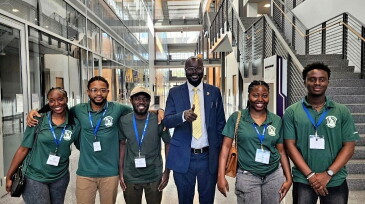
Oladunjoye Oluwanifemi V, SPE, shares how teamwork, resilience, overnight study sessions, and a commitment to learning helped her team win the SPE Africa PetroBowl Regional Competition.

Students from around the globe are invited to participate in the 2026 Switch Global Case Competition to tackle the pressing issue of energy poverty and compete for $50,000 in prize money.
-
 Cherish Chukwu, SPE, won the 2026 SPE Africa Regional Student Paper Contest and will represent the SPE Africa Region at the 2026 SPE International Student Paper Contest.
 -
The 5-year multidisciplinary program will offer students the opportunity to earn a BS in engineering and an MS in business.
-
A global portal to collaboration and growth, the Student Chapter Development Workshop connects SPE student chapters worldwide to exchange knowledge and learn from industry experts, all under the 2026 theme of catalyzing carbon management innovation.
-
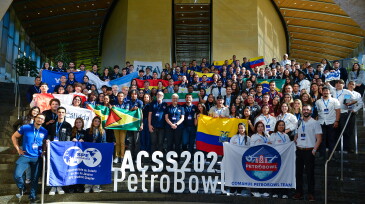
The 2026 Latin America and Caribbean Student Symposium brought together students and industry leaders from across Latin America and the Caribbean for a packed program of technical, academic, and networking activities that fostered collaboration, professional growth, and future leadership in the energy sector.
-
The Wonderful World of Oleum is an inclusive storytelling initiative that evolved from a volunteer-written book into a global, multi-format project that humanizes the energy industry, fosters connection, and inspires diverse audiences, especially young people, to explore STEM careers.
-
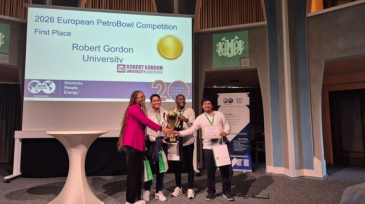
The Robert Gordon University PetroBowl Team shares the story of their victory at the 2026 SPE Europe PetroBowl Championship, reflecting on the preparation, teamwork, and resilience that carried them to the top of one of the most competitive academic stages.
-
The University of Ibadan PetroBowl team recalls their recent success at the Annual Students’ Technical Symposium and Exhibition.
-
Standing out in today’s AI-saturated job market isn’t about doing more, but about developing and communicating distinctive, thoughtful insights that make you memorable rather than just polished and competent.
-
For the first time in program history, Missouri University of Science and Technology claimed the top spot at the 2026 SPE North America Student Symposium PetroBowl Championship—a win that was years in the making.
-
Rita Okoroafor, SPE, reflects on her journey from petroleum engineering to academia, emphasizing how subsurface expertise, curiosity, and collaboration can drive innovation and support the transition to sustainable, low-carbon energy systems.






Page 1 of 41