


[Editor's Note: Adeshina Badejo is a member of the TWA Editorial Board and is the author of previous TWA articles.]
Youwei He is a professor in the department of petroleum engineering at Southwest Petroleum University, China. He was also a visiting scholar at Texas A&M University from 2017 to 2018. His research focuses on the multiphase flow and phase behavior of carbon capture, utilization, and storage (CCUS) and underground gas storage (UGS).
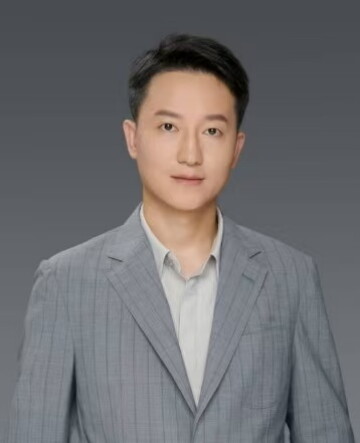
He has led more than 10 research projects focused on CCUS and UGS topics and has coauthored more than 50 technical papers in journals and SPE conferences.
He has served as an associate editor for SPE Journal, Journal of Petroleum Science and Engineering, and Geoenergy Science and Engineering. He has also served as a committee member for OTC Asia, URTeC, SPE regional awards, the SPE Section Award, and the SPE Student Chapter Award.
He is the recipient of the 2026 SPE Northern Asia Pacific Regional Young Professional Outstanding Service Award and has received the SPE Technical Reviewer Outstanding Service Award four times.
He holds a PhD in petroleum engineering from the China University of Petroleum (Beijing) and a BSc degree in petroleum engineering from Southwest Petroleum University.
He was recently named a 2026 TWA Energy Influencer and sat down with TWA to discuss what this recognition means to him, his career path, and his advice to students and young professionals.
Adeshina Badejo (AB): Congratulations on being named a 2026 TWA Energy Influencer and on receiving the 2026 SPE Northern Asia Pacific Regional Young Professional Outstanding Service Award. What do these recognitions mean to you personally, and how do you see them influencing the next stage of your career?
Youwei He (YH): Thank you very much. I am deeply honored and humbled by these two recognitions. Being named a 2026 TWA Energy Influencer is a strong encouragement for my work in carbon capture, utilization and storage (CCUS), underground gas storage (UGS), and subsurface energy systems. The 2026 SPE Northern Asia Pacific Regional Young Professional Outstanding Service Award means a great deal to me personally because it reflects my long-term commitment to SPE service, peer review, mentoring, and the professional community. These honors are not mine alone; they belong to my mentors, collaborators, students, and family. They will encourage me to continue advancing research that can be translated into safe and efficient field applications, to support young professionals, and to serve SPE and the global energy community more actively.
AB: Your career has developed largely within academia, from earning your PhD in petroleum engineering to becoming a professor at Southwest Petroleum University, China. What sparked your interest in pursuing an academic career, and what has kept you motivated along the way?
YH: My interest in academia grew from a fascination with the complex physical processes that occur in the underground porous space. During my research in subsurface oil and gas production, CCUS, and UGS, I became increasingly interested in multiphase fluid flow and phase behavior, especially how fluids interact with each other and with reservoir rocks under changing pressure and temperature in the porous media. What has kept me motivated is the opportunity to combine fundamental research, teaching, and service; to solve problems relevant to energy security and the energy transition, and to work with talented students and collaborators.
AB: You were a visiting scholar at Texas A&M University from 2017 to 2018. How did that international research experience shape your approach to research, teaching, or collaboration when you returned to China?
YH: My time at Texas A&M University from 2017 to 2018 was very influential. I was a visiting scholar in the department of petroleum engineering under the supervision of John Killough. That experience gave me the opportunity to experience a different research culture, work with international colleagues, and see how complex subsurface problems are approached through interdisciplinary collaboration. I learned the value of asking clear questions, being rigorous with data, and communicating research effectively across disciplines and cultures. When I returned, I tried to bring those lessons into my own group by encouraging open discussion, strengthening international collaboration, and helping students connect fundamental research with practical engineering challenges. It also made me more committed to building long-term international partnerships.
AB: Your research focuses on multiphase flow and phase behavior in CCUS and UGS. For readers who may not work directly in these areas, why are multiphase flow and phase behavior so important to the safe and efficient operation of subsurface storage projects?
YH: The conventional UGS based on depleted gas reservoirs and salt cavern has extended to UGS based on condensate reservoirs, oil reservoirs, and aquifer. Thus, we are not dealing with a single fluid in both CCUS and UGS. CO2, natural gas, crude oil, water, and brine can coexist, and their phase behavior changes with pressure, temperature, and composition. Multiphase flow and phase behavior determine how fluids move through pores, how they distribute in the reservoir, and how much can be injected or stored. They also affect injectivity, storage capacity, wellbore integrity, and long-term containment. If we cannot predict these processes accurately, we may face problems such as reduced injectivity, salt precipitation, corrosion, leakage risks, or poor project economics. For readers outside the field, the key point is simple: safe and efficient subsurface storage depends on understanding fluid behavior and flow through underground porous media and wellbores during the full operation cycle.
AB: CCUS and UGS involve different objectives, but they share many subsurface engineering challenges. From your research, what lessons or technologies from conventional UGS can be transferred to large-scale CO2 storage, and where do the two require fundamentally different approaches?
YH: The UGS, CO2-EOR, and storage share many subsurface engineering fundamentals, such as reservoir characterization, phase behavior, numerical modeling, wellbore integrity, pressure management, monitoring, and the need to predict multiphase flow and fluid-rock interactions. CO2 can also be used to improve oil recovery in the UGS based on oil reservoirs and serve as the cushion gas. Experience from UGS in cyclic injection and production, caprock integrity, and operational monitoring can certainly guide large-scale CO2- EOR and storage projects. However, the differences are also significant. UGS is designed for cyclic gas storage and production, while CO2 storage aims for permanent containment over very long timescales. CO2 has distinct density, viscosity, solubility, and chemical reactivity. It can dissolve in brine, react with rocks, and migrate buoyantly. Therefore, CO2 storage requires even greater attention to long-term sealing, geochemical reactions, impurity effects, and field monitoring, measurement, and verification.
AB: Your research has examined phenomena such as fluid interactions, water evaporation, and salt precipitation in subsurface storage systems. How can these small-scale pore or near-wellbore processes affect injectivity, storage capacity, and long-term project performance?
YH: Small-scale processes can have large-scale consequences for field projects. Water evaporation can increase brine salinity and trigger salt precipitation, especially near the wellbore where pressure and temperature changes are strongest. Salt precipitation can block pores, alter relative permeability, and reduce injectivity. Fluid interactions can change wettability, capillary pressure, and the effective flow pathways in the reservoir. These effects may not be obvious at the beginning of a project, but over time they can reduce storage capacity, increase injection pressure, and create uneven flow. In the worst case, near-wellbore formation and wellbore damage may significantly limit the injection/production and require expensive remediation. The reduction of salt precipitation is crucial for long-term safe and efficient operation of the UGS, especially with high-salinity formation water. This is why we need coupled experimental, theoretical, and numerical studies across pore, core, near-wellbore, and reservoir scales. Our salt deposition mechanism and simulation method has been applied to UGS projects in China.
AB: As CCUS moves from research and pilot projects toward wider commercial deployment, what technical challenges do you believe still deserve greater attention from researchers and industry practitioners?
YH: Several challenges deserve more attention as CCUS moves toward commercial deployment. First, gas channeling control in CO2-EOR remains one of the significant technical barriers. CO2 has low viscosity and density, and in heterogeneous reservoirs it tends to bypass oil-bearing zones through high-permeability channels, resulting in premature breakthrough at production wells. This reduces sweep efficiency, causes ineffective gas recycling, increases corrosion risk in production strings, and ultimately limits incremental oil recovery. Gas channeling is both a technical issue and a key factor that constrains the economic performance of CO2-EOR projects and hinders large-scale field deployment. While chemical conformance control technologies (e.g., polymer gels, foams, and responsive gels) have shown promise, their field performance is often significantly lower than laboratory results, and issues such as plugging agent stability and effective duration remain unresolved. More research is needed on early prevention, integrated diagnosis, and adaptive control strategies.
Second, CO2 source-sink matching optimization is critical for commercial deployment. Matching CO2 emission sources with suitable storage sites involves complex trade-offs among transportation distance, pipeline infrastructure, source purity and stability, storage capacity, and geological suitability. Achieving an optimal source-sink configuration may require more realistic constraints, integrated optimization frameworks, and dynamic decision-making tools.
Third, long-term containment and monitoring need stronger technical foundations, including better tools for detecting and predicting leakage risk.
Fourth, wellbore integrity under CO2-rich conditions, especially with impurities, remains a critical issue.
Fifth, integrated reservoir-wellbore-surface simulation and optimization technologies are also important for improving the performance, economics, and safety of CCUS projects. CCUS involves coupled processes across subsurface reservoirs, wellbores, and surface facilities. If these components are modeled separately, it is difficult to capture the interactions that control injectivity, production, pressure management, and overall system efficiency. Integrated simulation and optimization can help operators make better decisions on injection schemes, facility design, and operational strategies.
Sixth, the deep integration of artificial intelligence (AI) methods with CCUS is essential to enable efficient computation, dynamic optimization, and early warning. AI can accelerate reservoir simulation, improve history matching, optimize injection and production schedules, and provide real-time risk alerts. Combining AI with physical models offers great potential for handling the complexity and uncertainty of large-scale CCUS projects.
Finally, economic and policy challenges cannot be overlooked. CCUS requires substantial capital investment, and the costs of CO2 capture, transportation, and injection remain high. Without sufficient market incentives or cost-recovery mechanisms, large-scale CCUS deployment remains financially unattractive to most industries. Carbon pricing mechanisms, tax credits, subsidies, and stable regulatory frameworks are essential to de-risk investment and create viable business models.
These challenges are not only research problems: they require close collaboration among academia, industry, regulators, and society.
AB: Having led more than 10 research projects in CCUS and UGS, how do you decide which research problems are both scientifically important and relevant to real industry needs? What can academia do better to ensure that research findings translate into field applications?
YH: Petroleum and natural gas engineering is a discipline that integrates fundamental research with field application. I have long believed that scientific questions should originate from practical problems. Accordingly, my group works closely with oil and gas companies to understand the technical issues in CCUS, UGS, and oil and gas production. From these practical challenges, we propose scientific and technical questions, serving to support solutions to the technical problems. Thus, I prioritize problems that both advance fundamental understanding and address a real bottleneck in field operations. Finally, translating research into field applications requires continuous interaction with field engineers. Academic research should not stop at publication. It needs to be tested, applied, and refined in real operations. By working closely with field engineers, we can better understand operational constraints, validate our methods under realistic conditions, and continuously improve them based on field feedback.
AB: As a professor working in rapidly evolving areas such as CCUS and subsurface energy storage, how do you prepare your students for an industry in which the technical skills and energy technologies they encounter may continue to change throughout their careers?
YH: Disciplines and research directions continue to evolve, but many fundamental abilities for solving problems remain constant, such as rigorous thinking, mathematical and physical modeling, data analysis, experimental design, numerical simulation, and the ability to identify and formulate problems. These abilities are transferable across CCUS, UGS, and emerging areas such as enhanced geothermal systems, underground hydrogen storage, and compressed air energy storage. I also encourage students to develop interdisciplinary thinking, communication skills, teamwork, and international collaboration. At the same time, I place strong emphasis on developing and strengthening students’ practical ability to solve problems in oil and gas projects. Through industry-collaborative projects, field data analysis, laboratory experiments, and numerical simulation, students learn to define practical engineering problems, design solutions, and communicate with field engineers. I also encourage them to participate actively in SPE activities and present their work in academic conference. The energy landscape will continue to change, so the most important ability is continuous learning.
AB: You have served as an associate editor for major technical journals and have received the SPE Technical Reviewer Outstanding Service Award four times. From your experience as an author, reviewer, and editor, what distinguishes technically strong and impactful research from work that may be technically sound but has limited influence?
YH: As an author, reviewer, and associate editor, I pay close attention to whether a study offers originality. Innovation can take different forms. It may be a novel contribution in a hot emerging field, or it may be an important advance on a classical, long-standing problem. I believe both can produce significant impact, although hot topics may naturally attract broader readership. Overall, whether the problem is new or old, as long as there is an innovative contribution, I think the work is worth refining and considering for publication. At the same time, a paper must be methodologically rigorous, reproducible, and clearly presented. In particular, the innovation and contribution need to be stated explicitly. For papers in petroleum engineering, in addition to theoretical or fundamental studies, I also encourage authors to provide field examples and application results. These are of great interest to peers and can significantly enhance the value and impact of the work.
AB: Beyond your research and teaching, you have devoted significant time to SPE through technical reviewing, conference committees, and awards committees. How has SPE volunteering contributed to your own professional development, and why should students and young professionals consider becoming actively involved in professional societies?
YH: SPE is a leading global platform for high-level academic exchange and collaboration in the oil and gas industry. Through my volunteer service with SPE, I have benefited greatly in my own professional development. I have had opportunities to work with people from different countries, companies, and universities, and to learn how the global energy community addresses technical and professional challenges. In addition, I regularly receive updates from SPE on the latest academic, technical, and educational developments and progress, and I can learn from outstanding people in the field. Serving on committees and reviewing papers has also improved my own research and leadership skills. For students and young professionals, professional societies like SPE offer mentorship, networking, visibility, and a chance to develop skills that are difficult to gain only in the classroom or laboratory. Volunteering is not just service; it is also a form of learning and career development.
AB: Finally, for students and young professionals who hope to build careers in petroleum engineering, CCUS, UGS, or academia, what skills, habits, or principles would you encourage them to start developing today?
YH: I would encourage them to build strong fundamentals, stay curious, and develop the habit of lifelong learning. Technical skills matter, but so do communication, teamwork, integrity, and resilience. They should seek mentors, ask questions, and not be afraid of difficult problems or early failures. It is also important to understand the broader energy context since petroleum engineering, CCUS, UGS, and subsurface energy storage are increasingly connected. I would advise young professionals to get involved in SPE, present their work, and build an international network. Finally, choose work that you find meaningful, and remember that lasting contributions usually come from persistence, collaboration, and a commitment to doing things well.
