

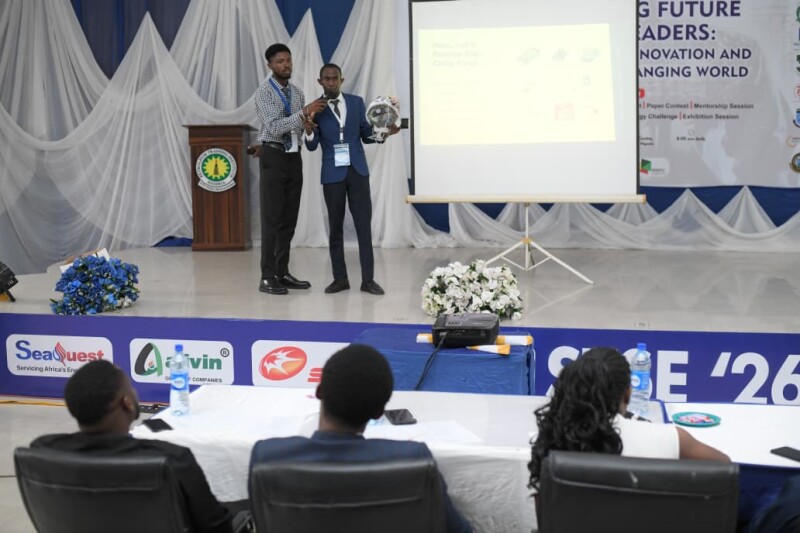
The 2026 SPE Students Technical Symposium and Exhibition (STSE), held at Petroleum Training Institute in Warri, Delta State, brought together students, young professionals, and industry leaders for technical exchange, innovation, and collaboration across the energy sector. This objective was clearly reflected in one of its most competitive segments, the Energy Challenge Competition. The competition attracted participation from over 50 universities across Nigeria, each presenting practical solutions to pressing industry problems. After multiple rounds of evaluation, six teams advanced to the final stage.
It was at this stage that our team had the opportunity to present our solution, which would eventually emerge as the winning entry.
However, beyond recognition, what defined our journey was the problem we chose to confront and the perspective we brought to it.
Looking Beyond Systems to People
In the oil and gas industry, significant investments have been made in monitoring and optimizing infrastructure. Technologies such as supervisory control and data acquisition systems allow operators to track pipeline conditions, detect anomalies, and respond to failures in real time. These systems have become standard in ensuring operational efficiency and asset integrity.
However, while critical infrastructure is continuously monitored, human operators, arguably the most valuable assets in any operation, do not always receive the same level of attention. This gap became the foundation of our approach.
We presented a case scenario involving a worker referred to as ‘Engineer Chike,’ whose physical condition deteriorated over a period of more than 30 minutes without immediate intervention. While hypothetical in the competition setting, the scenario reflects a broader reality across many operational environments where delayed response times can escalate incidents and increase risk exposure.
The question we asked was simple but fundamental: If advanced monitoring systems exist for equipment, why are similar systems not universally applied to protect human life?
Concept Development: The Smart Safety Helmet
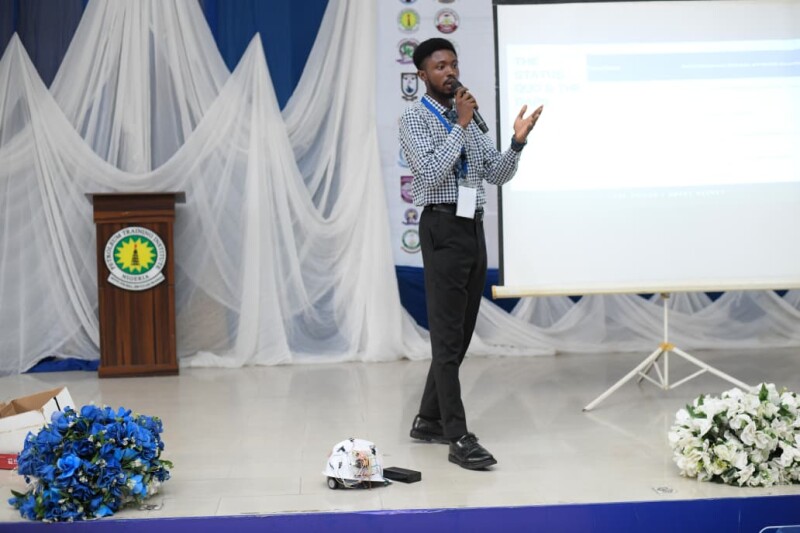
In response, we developed the concept of a smart safety helmet, an integrated personal safety system designed to provide real-time monitoring and rapid emergency response capabilities for field personnel.
The helmet incorporates three core functionalities.
- Physiological monitoring through continuous tracking of the worker’s pulse rate to detect signs of distress or abnormal health conditions.
- Gas detection using embedded sensors capable of identifying the presence of hazardous gases in the immediate environment.
- Real-time location tracking using GPS to allow quick identification of a worker’s position during emergencies.
These features are integrated into a unified system that transmits data in real time to a central monitoring platform. In the event of abnormal readings, whether physiological or environmental, the system triggers immediate alerts and enables rapid response from safety teams.

The goal was not to replace existing safety protocols but to enhance them by introducing a proactive layer of monitoring focused on human well-being.
Bridging the HSE Investment Gap
One of the critical observations that shaped our solution was the disparity in how resources are allocated within the industry. While there is strong emphasis on process optimization, digital transformation, and production efficiency, investments in health, safety, and environment (HSE) technologies, particularly those centered on personnel, often lag behind.
Basic protective equipment is widely used, but many of these tools remain passive rather than intelligent. As operations become more complex and environments more demanding, there is a growing need to transition from passive safety measures to active, data-driven systems.
The smart safety helmet represents a step in that direction.
By embedding sensing and communication capabilities into standard personal protective equipment, safety becomes continuous rather than reactive. Incidents can be identified earlier, response times can be reduced, and overall risk exposure can be minimized.
From Concept to Impact
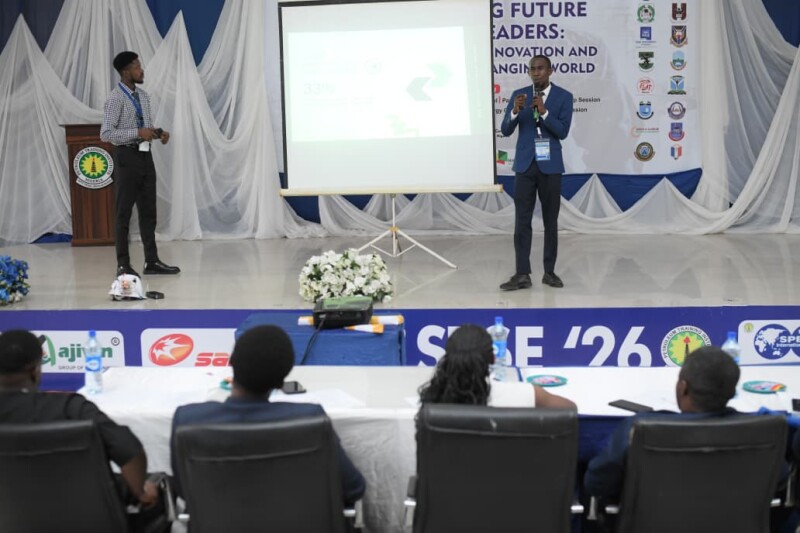
During the final presentation at STSE 2026, our focus was not only on the technical feasibility of the solution but also on its practical relevance and scalability. We demonstrated how the system could be integrated into existing operational frameworks and how it aligns with the broader industry push toward digitalization and smart field technologies.
Competing against top teams from across the country, each presenting innovative ideas, the experience was both challenging and inspiring. At the conclusion of the competition, we were honored to be announced as the winners of the Energy Challenge Competition.
While the recognition was significant, the more important outcome was the validation of an idea centered on a simple principle: Human life must remain at the core of engineering innovation.
The Team Behind the Solution
This achievement was the result of a collaborative effort by an exceptional team comprising Ogboro Olaoluwa, Samuel Uko, Kehinde Adegboye, Chi-ife Ileka, Kenneth Silva-Eboagwu, Gerald Udomeh, Boluwatife Odujirin, Raphael Ajah, and Oluwatimilehin Adegoke.
Each member contributed across different aspects of the project, including research, problem framing, solution development, and presentation strategy. The diversity of perspectives within the team played a critical role in refining the concept and strengthening its practical relevance.
The Energy Challenge Competition was not only a test of technical competence, but also of teamwork, coordination, and the ability to align ideas toward a shared objective.
This recognition is therefore a reflection of a collective effort, built on collaboration, shared commitment, and a unified vision to address a critical industry challenge.
The Role of Platforms Like STSE
Events such as STSE play a vital role in shaping the next generation of energy professionals. By providing a platform for students to engage with real industry challenges, they encourage critical thinking, collaboration, and solution-driven approaches.
The competition highlights the importance of aligning technical innovation with societal and operational needs. It reinforces the idea that engineering is not only about systems and processes but also about people.
A Call for Action
As the energy industry continues to evolve, the integration of advanced technologies will remain a key driver of progress. However, true advancement requires a balanced approach that prioritizes both operational excellence and human safety.
The question remains: How many real-life scenarios similar to that of ‘engineer Chike’ must occur before more attention is directed toward intelligent, human-centered safety systems?
The answer lies in the decisions made today by engineers, organizations, and stakeholders across the industry. Innovation should not only improve how we produce energy, but also how we protect the people who make it possible.

Samuel Uko, SPE, is a petroleum engineering student at the University of Lagos with interests in reservoir engineering, petroleum economics, and energy policy. He recently completed an internship with SLB in the well construction department, gaining experience in drilling operations and wellsite engineering workflows. Uko currently serves as president of the SPE University of Lagos Student Chapter and has contributed to industry conversations as a speaker at SAIPEC. He is also a published researcher with works hosted on OnePetro and other global research repositories.

Ogboro Olaoluwa 'Kingsam', SPE, is a final-year petroleum and gas engineering student at the University of Lagos, with internship experience spanning oil and gas and renewables. He has completed four industry internships across three countries, won competitions at national and global levels, including the SPE National Energy Challenge 2026, and published two peer-reviewed papers on pipeline corrosion and nanotechnology. He is actively pursuing a fully funded MSc/PhD research program in production engineering and flow assurance.