Data & Analytics

This introduction to mixed integer linear programming explains how engineers can model operational constraints, optimize production systems, and improve decision-making across oil and gas facilities.

This article from Murphy Oil outlines a modernization effort that resulted in increased scenario simulation capacity by five to 10 times.

The emerging vision is an industry where engineers focus on judgment, risk assessments, and accountability.
-
 The report highlights the fast evolution of AI with better performance, bigger investment, and rising global optimism. But job concerns, education gaps, and environmental costs reveal a more complex picture.
-
Integrating financial and HR expertise boosts profitability, reduces operational risks, and enhances long-term planning—empowering HR to tackle sector-specific challenges like budget constraints and talent shortages more effectively.
-
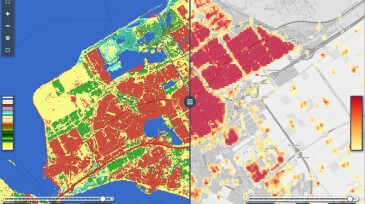
The data include high-resolution spatial layers for environmental research, monitoring, and geospatial analysis.
-
The energy-focused LLM project by Aramco Americas, SPE, and i2k Connect has entered the testing phase and is on track for licensing to operators later this year.
-
Although 92% of energy companies say they plan on digital technology investments, only 27% currently retrain and reskill existing employees to meet the upcoming demand, according to a recent survey from Ernst & Young.
-
The company is investing $1 billion to establish the Engineering and Innovation Excellence Center (ENGINE) in Bengaluru, India.
-
The department was established in October with $3 million in funding from Anuradha and Vikas Sinha and aims to advance data science education, research, and career development.
-
Yujing Du made history as she was named The University of Tulsa's first female petroleum engineering faculty member in January. In this Q&A, she discusses the role of petroleum engineering in the global energy transition, diversity in STEM, and strategies for supporting women in the energy sector.
-
On long-term trends, most things in the world are getting better, but gradual improvements don't make the news.
-
Subsurface modeling and history matching are critical steps for driving decisions. Generative artificial intelligence can support these efforts by incorporating various sources of information and allowing for low-dimensional parameterization for history matching.