Data & Analytics

How AI-powered well planning is transforming field development by accelerating trajectory design, reducing drilling risk, optimizing costs, and helping engineers deliver safer, more efficient wells.

2026 TWA Energy Influencer Muhammad Karimi shares how he transformed academic research into a globally deployed energy technology, offering insights on innovation, entrepreneurship, oilfield digitalization, and the energy transition.

Discover how AI leader Fatai Anifowose transformed skepticism into innovation, sharing insights on artificial intelligence in energy, leadership, continuous learning, and the skills shaping the future of the industry.
-
 This article provides a mirror between the past and the present of well intervention technologies, including R&D to advance to downhole robots and autonomous intervention methods.
 -
Registration is open for the SPE Europe Energy GeoHackathon, which will be held in October and November. It will be preceded by 4-week online bootcamp sessions on data science and geothermal energy, which will begin on 2 October.
-
Explore the challenges associated with fiber-optics data analysis and how recent advances in technology can be leveraged to maximize the value of the data.
-
Join Serkan Dursun, Saudi Aramco, and Salem Algharbi, SDAIA, as they explore the capabilities and limitations of large language models GPT-3 and GPT-4 and ChatGPT and discuss their potential applications in the oil and gas industry.
-
SPE and Project Innerspace are organizing the first Geothermal AInnovation Competition. Teams from around the world are invited to participate in this virtual competition aimed at showcasing the potential of AI-assisted work flows in the geothermal life cycle.
-
Dan Jeavons, Shell’s VP of computational science and digital innovation, discussed the findings in MIT’s recent report on digital technology’s impact on a net-zero emissions future with Aman Srivastava, TWA deputy editor in chief.
-
Join us for the final installment in our four-part series focused on addressing the implementation of AI in the petroleum industry using a real case study.
-
Continue our journey with Part 3 of this four-part series focused on addressing the implementation of AI in the petroleum industry using a real case study.
-
Join us for Part 2 of a four-part series focused on addressing the implementation of AI in the petroleum industry using a real case study.
-
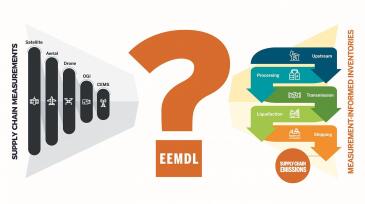
The program is designed to analyze, report, and study solutions for oil and gas greenhouse gas emissions.