Digital Transformation

Discover how AI and machine learning are transforming oil and gas field development by reducing subsurface uncertainty, optimizing development decisions, and maximizing long-term reservoir value from concept selection through production.

As upstream operators move beyond isolated experiments, the hardest part of the AI journey is not building a model, it is making it stick.

How 7 decades of AI research, including the emergence of agentic AI, are reshaping oil, gas, renewables, and the grid.
-
 David Nnamdi, SPE, speaks about his work as a data scientist and engineer, his development of Sequestrix, an open-source CO2 transport network optimization tool, and where he sees data science and AI’s role in the future of sustainable energy.
 -
AI is beginning to transform well management by helping engineers predict electrical submersible pump failures before they happen, optimize drawdown more efficiently, and generate reliable forecasts even when data is scarce or noisy.
-
The oil and gas industry's shift to smart fields—driven by automation, AI, and real-time data—requires petroleum engineers to master digital technologies alongside traditional skills.
-
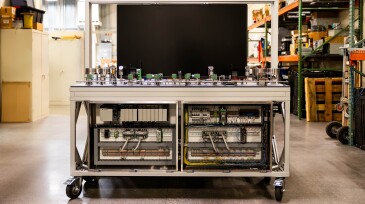
Tiger Skid, a custom-built cyber-physical training and testing platform, simulates real-world energy systems and industrial processes vulnerable to cyber-physical attacks.
-
As the energy sector rapidly evolves to address climate change, tools such as the En-ROADS Climate Solutions Simulator are essential for young professionals seeking to understand the complexities of the transition and make informed, impactful decisions.
-
Artificial intelligence is transforming—not replacing—petroleum engineering. As AI-driven, data-centric methods replace traditional deterministic models, engineers must adapt by acquiring skills in data science, algorithmic thinking, and software tools. The industry’s evolution raises a critical question: Will petroleum engineers evolve with these changes or risk beco…
-
Digital transformation in the oil and gas industry is likened to a major home renovation—requiring a clear vision, skilled collaboration, patience, and investment in lasting solutions. Though the process is challenging, the end goal is an improved, future-ready operation.
-
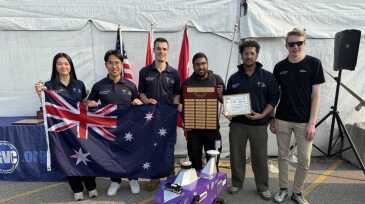
Students at the Melbourne, Australia, university took home first place at the 32nd US-based Intelligent Ground Vehicle Competition.
-
The university will join a small number of institutions in the US offering an undergraduate degree focused exclusively on artificial intelligence.
-
The report highlights the fast evolution of AI with better performance, bigger investment, and rising global optimism. But job concerns, education gaps, and environmental costs reveal a more complex picture.