R&D/innovation

Texas A&M Researchers To Develop AI-Powered Drilling System To Accelerate Critical Mineral Discovery
Backed by a $3.5 million US Department of Energy grant, Texas A&M researchers are developing an AI-enabled drilling system that can identify critical minerals in real time, reducing exploration time and costs for rare earth element deposits.

Discover how the next generation of energy leaders is driving innovation and reshaping the future of the global energy industry in this SPE Live with 2026 SPE President Jennifer Miskimins and three young professionals, including Hitisha Dadlani, deputy editor in chief of TWA.

In an industry that rarely slows down, memory can be a powerful engineering tool. Not in terms of nostalgia, but in perspective. Many of the activities that constituted daily operations have been so deeply transformed that new generations of engineers may never have experienced them before.
-
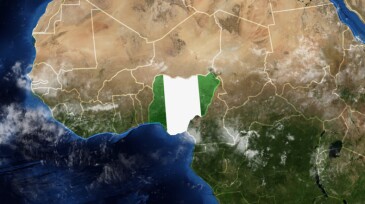
 A study employed a rigorous mathematical model to estimate the quantity of recoverable geothermal heat in Nigeria’s subsurface formations.
 -
Mineralogical, mechanical, and flow complexities in major US shale plays are tightly linked, making traditional 1D modeling inadequate. Emmanuel Obasi, SPE, addresses this with a physics-informed ML approach detailed in this article.
-
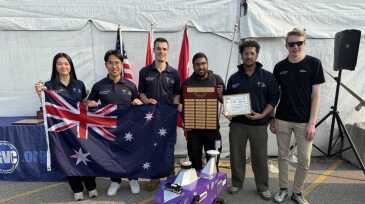
Students at the Melbourne, Australia, university took home first place at the 32nd US-based Intelligent Ground Vehicle Competition.
-
A University of Tulsa PhD student Gulnur Ualiyea is advancing CO2 well injection technology through groundbreaking research on downward gas-liquid flow. Her innovative work is gaining global recognition and reshaping the future of sustainable energy.
-
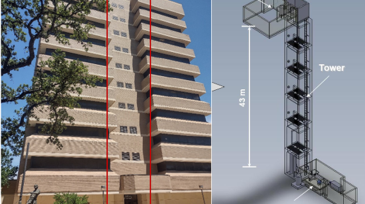
The university's 142-ft multiphase flow loop tower is a 10-story engineering marvel pushing the boundaries of petroleum research in production operations, flow assurance, and safe offshore drilling.
-
Innovation occurs by thinking differently and creatively. What makes innovation commercial is its desirability to users, its viability in the marketplace, its economic soundness, and its basis in workable technology.
-
Materials smaller than the width of a human hair are contributing to improved hydraulic fracturing and other areas of oil and gas technology.
-
Three women working in R&D offer perspectives on their work, why they joined that branch of the industry, what projects they work on, and what keeps them challenged.
-
New technology and innovation will always be key elements for the successful development of oil and gas reserves, and continued R&D activities are essential to meet this objective.
-
A career in R&D is not for everyone. Brant Bennion discusses the opportunities and how he has found an R&D career rewarding.