R&D/innovation

Texas A&M Researchers To Develop AI-Powered Drilling System To Accelerate Critical Mineral Discovery
Backed by a $3.5 million US Department of Energy grant, Texas A&M researchers are developing an AI-enabled drilling system that can identify critical minerals in real time, reducing exploration time and costs for rare earth element deposits.

Discover how the next generation of energy leaders is driving innovation and reshaping the future of the global energy industry in this SPE Live with 2026 SPE President Jennifer Miskimins and three young professionals, including Hitisha Dadlani, deputy editor in chief of TWA.

In an industry that rarely slows down, memory can be a powerful engineering tool. Not in terms of nostalgia, but in perspective. Many of the activities that constituted daily operations have been so deeply transformed that new generations of engineers may never have experienced them before.
-
 The universities are forming a national hub focused on advancing safe and reliable subsurface storage of energy-related fluids.
 -
Ganesh Thakur and George K. Wong will study deepwater Gulf of Mexico reservoirs to advance reservoir simulation and statistical analysis to evaluate production strategies, compare reservoir parameters, and improve recovery estimates.
-
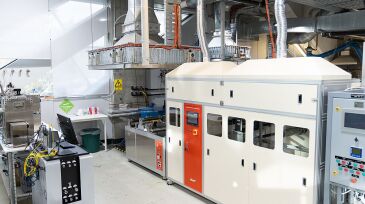
The semi-pilot system uses custom membranes and catalysts to release hydrogen from liquid organic hydrogen carriers at low temperatures, reducing energy use and costs compared with current high-temperature methods.
-
Led by OSU's Prem Bikkina, SPE, the research focuses on compiling and analyzing geological and geochemical data to estimate white hydrogen availability in Oklahoma and surrounding states.
-
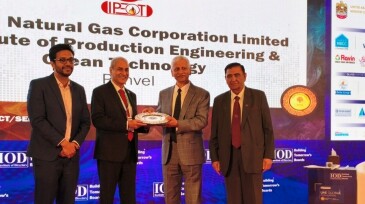
Rajiv Nischal, head of ONGC’s Institute of Production Engineering and Ocean Technology (IPEOT), shares the company's latest developments in technology, sustainability, safety, and more.
-
In this interview, Purohit explains why ultrasonic technology is rising as a dominant solution for gas-flow applications and how engineering teams can approach measurement as a tool not just for accountability but also for operational excellence.
-
David Nnamdi, SPE, speaks about his work as a data scientist and engineer, his development of Sequestrix, an open-source CO2 transport network optimization tool, and where he sees data science and AI’s role in the future of sustainable energy.
-
Microgrids are no longer niche innovations—they have become a foundational component of modern energy infrastructure. Realizing their full potential will require targeted policy reform, clearer regulatory frameworks, and greater access to innovative financing models.
-
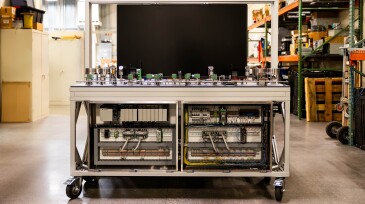
Tiger Skid, a custom-built cyber-physical training and testing platform, simulates real-world energy systems and industrial processes vulnerable to cyber-physical attacks.
-
As the energy sector rapidly evolves to address climate change, tools such as the En-ROADS Climate Solutions Simulator are essential for young professionals seeking to understand the complexities of the transition and make informed, impactful decisions.