R&D/innovation

Texas A&M Researchers To Develop AI-Powered Drilling System To Accelerate Critical Mineral Discovery
Backed by a $3.5 million US Department of Energy grant, Texas A&M researchers are developing an AI-enabled drilling system that can identify critical minerals in real time, reducing exploration time and costs for rare earth element deposits.

Discover how the next generation of energy leaders is driving innovation and reshaping the future of the global energy industry in this SPE Live with 2026 SPE President Jennifer Miskimins and three young professionals, including Hitisha Dadlani, deputy editor in chief of TWA.

In an industry that rarely slows down, memory can be a powerful engineering tool. Not in terms of nostalgia, but in perspective. Many of the activities that constituted daily operations have been so deeply transformed that new generations of engineers may never have experienced them before.
-
 Emerson and HeroX are teaming up to award $60,000 in prize money to inventive thinkers who develop next-generation solutions to advance flow-measurement technology in critical industrial systems.
 -
Assistant Professor Lori Tunstall received more than $1 million from the Gordon and Betty Moore Foundation to explore how municipal waste can be converted into biochar to replace cement in concrete.
-
This article introduces a tender strategy framework—a four-pillar model built on nearly 2 decades of international upstream experience—that integrates engineering rigor with business strategy to improve contract awards, strengthen transparency, and deliver lasting project performance.
-
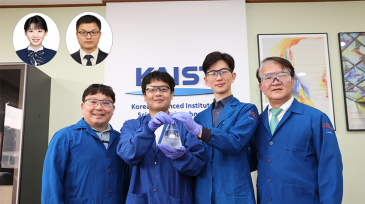
Researchers at KAIST developed an integrated chemobiological platform that converts renewable feedstocks like glucose and glycerol into essential aromatic hydrocarbons (BTEX) using engineered E. coli strains and a solvent-integrated catalytic process, offering a sustainable alternative to petroleum-based production.
-
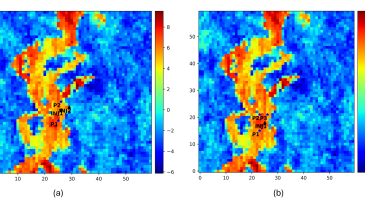
The two projects under the university’s Targeted Proposal Teams program will focus on underground hydrogen and geologic storage solutions.
-
The oil and gas sector stands on the edge of a digital revolution, yet legacy systems and resistance to change continue to hold it back. I reflect on my experience in digital drilling and argue that the industry’s biggest barrier isn’t technology itself, but the culture that surrounds it.
-
Researchers at Colorado School of Mines explore an internally deployed fiber-optic distributed acoustic sensing (DAS) method for continuous gas-pipeline monitoring, demonstrating its potential to improve leak detection, enable early intervention, and enhance overall pipeline-integrity management compared to conventional inspection techniques.
-
Early- and mid-career scholars are invited to apply for the 2026–2027 Harrington Faculty Fellows Program, which will focus on energy research.
-
Learn how scalable modeling methods help turn the complex design of CO₂ storage systems into practical solutions.
-
Kyle Haustveit, SPE, as been confirmed as the 16th Assistant Secretary for the US Department of Energy’s Office of Fossil Energy.