Technology

Learn how a five-step decision framework helps refineries select the right H2S removal technology by balancing compliance, risk, complexity, and cost.

A data-driven look at fuel savings, battery degradation, and net CO2 impact over a 10-year ownership period.

In an industry that rarely slows down, memory can be a powerful engineering tool. Not in terms of nostalgia, but in perspective. Many of the activities that constituted daily operations have been so deeply transformed that new generations of engineers may never have experienced them before.
-
 The demand for more and more oil and gas has prompted the industry to seek new areas of hydrocarbon deposits, and the development of subsea completions has kept pace.
 -
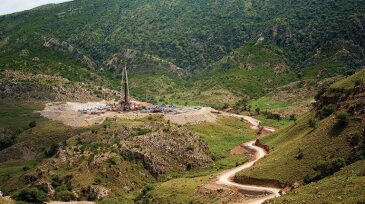
Photo by Osama Ikram Awan, Growww 2012 trainee engineer (Drilling Department), MOL, TAL Block, Province KP, Pakistan.
-
Shell Canada’s Andrew Chen and Ronald Pagan discuss what a petrophysicist does and petrophysics as a career in the petroleum industry.
-
-
This article highlights key knowledge that was shared at the SPE’s “Collision Avoidance and Well Interceptions Applied Technology Workshop” held in Inverness, United Kingdom, in September.
-
The essence of most drilling operations in our industry is to open the maximum length of reservoir formation with the minimum damage to the rock surface.
-
Exploiting deepwater resources in a cost-effective manner presents a number of challenges for the industry, In the deepwater Brazilian presalt, research and development may provide solutions.
-
Technology has allowed industry to develop in ever deeper water to successfully add to energy supplies, despite the high capital requirements.
-
An interview with Schlumberger's Amelia Irion on a career in research and development and the role of R&D in developing deepwater resources.
-
Deepwater activities involve significant risk. How the risks and challenges are managed may depend on corporate culture. Key aspects of corporate culture are discussed.