


[Editor's Note: Piergiuseppe Fiore is a member of the TWA Editorial Board and the author of previous TWA articles.]
There was a time when many of the tools and processes that define the industry looked very different from what we know today. Technologies that were once state-of-the-art have been replaced, digitized, automated, or completely reimagined.
Looking back offers more than a sense of nostalgia: it reveals how innovation has continuously reshaped the way we explore, produce, monitor, and manage energy resources. Subsurface knowledge faced a decades-long journey of transformation that highlights how far the industry has come—and perhaps hints at where it is headed next.
Nevertheless, understanding how we worked in the past, and why things changed, is not only a historical exercise. It is a way to better appreciate current technologies, challenge what we take for granted today, and prepare for future innovations.
So, do you recall?
Do You Recall When Formation Evaluation Meant Just Waiting?
There was a time when wireline logging operations were sequential and required time.
Data acquired bottomhole, transmitted to the surface, printed on long paper rolls, interpreted, and evaluated by engineers and geologist took hours, if not days. Critical decisions, such as casing depth or reservoir exposure, were made with incomplete information or behind schedule.
Today, logging while drilling (LWD) revolutionized this approach. Real-time data enables early formation evaluation while drilling phases are ongoing. Thanks to advanced telemetry and complex visualization systems, formation evaluation is not a separate sequential step.
Data timeliness is as important as its accuracy. Perfect but late information loses operational value.
Do You Recall When Directional Drilling Was Just an Interpolation Exercise?
There was a time when operating a well was more art than science.
Before the advent of real-time downhole measurements, advanced rotary steerable systems, and sophisticated well-planning software, directional drilling was often closer to an exercise in interpolation than precise navigation. Survey points were collected at relatively large intervals, calculations were performed manually or with basic software, and the actual well trajectory between two survey stations was largely estimated using mathematical assumptions. Engineers could only reconstruct the path after the fact, relying on sparse data and experience to infer what had happened downhole.
Today, directional drilling has evolved into an accurate data-driven discipline. Continuous measurements from measurement-while-drilling and LWD tools, real-time telemetry, advanced geosteering techniques, and powerful visualization software allow drilling engineers to monitor and precisely adjust the well path. What was once a process of estimating the trajectory between a handful of points has evolved to the ability to steer a wellbore within a target window only a few feet thick, thousands of meters below the surface.
The evolution of directional drilling perfectly illustrates the industry's broader digital transformation: moving from approximation and retrospective interpretation to real-time decision-making and precise subsurface navigation.
Do You Recall When Mud Engineering Was Mainly a Matter of Experience?
There was a time when mud engineering relied as much on personal experience as it did on scientific analysis. Drilling fluid properties were monitored through basic field tests, and many treatment decisions were guided by the intuition and practical knowledge accumulated by mud engineers over years in the field. Troubleshooting often depended on recognizing patterns from previous wells, with limited—or no—real-time data available to explain what was happening downhole.
As drilling operations became more complex, the discipline evolved into a highly technical science. Modern mud systems are designed using advanced laboratory testing, predictive models, real-time monitoring, and sophisticated chemical formulations tailored to specific geological and operational challenges. Engineers can now track fluid properties continuously, anticipate problems before they occur, and optimize performance with a high level of precision.
The journey of mud engineering reflects a broader shift within the industry: from decisions driven primarily by experience and observation to an integrated approach in which expertise is enhanced by data, analytics, and scientific understanding.
Do You Recall When Well Control Was Mainly Reactive?
For much of the industry's history, well control was largely a reactive discipline. Crews depended on surface observations, periodic measurements, and operational experience to identify the early signs of a kick. By the time an influx was detected, the response often involved quick and partial interpretations of limited information, applying established procedures to regain control of the well. Success depended heavily on vigilance, experience, and the ability to act decisively under pressure.
Today, well control is proactive. Advanced sensors, real-time monitoring systems, automated alarms, and integrated drilling data provide continuous visibility into downhole conditions. Sudden changes in flow rates, pressures, and mud volumes can be instantly detected, allowing fast identification of potential issues before their escalation into dangerous events. Training has also evolved, with sophisticated simulators, such as Saipem's interactive drilling simulator (Fig. 1), helping crews prepare for complex scenarios long before they encounter them in the field.

The transformation of well control reflects one of the industry's most important shifts: from reacting to problems after they appear to anticipating and mitigating risks before they develop, thereby improving both safety and operational efficiency.
Do You Recall When Reservoir Models Were Static Tools?
There was a time when reservoir models were essentially static snapshots of the subsurface. Built from limited geological, petrophysical, and seismic data, these models provided the best available representation of the reservoir at a specific moment in time. Updates were sporadic, requiring significant manual efforts, and engineers had to make critical development decisions based on interpretations that could remain unchanged for years despite new information becoming available.
Today, reservoir models are increasingly dynamic and continually refined (Fig. 2). Production data, pressure measurements, surveillance information, time-lapse seismic surveys, and advanced simulation tools are integrated to update the understanding of reservoir behavior throughout the asset's life cycle. Digital workflows and increasing computational power allow multidisciplinary teams to test scenarios, forecast performance, and optimize field development with unprecedented speed and accuracy.
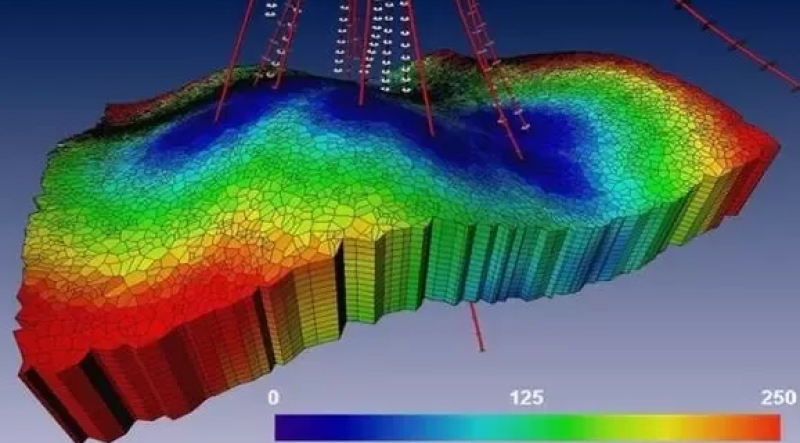
The evolution from static models to living digital representations has fundamentally changed reservoir management. What was once a periodic interpretation exercise has become a continual process of learning, updating, and improving decisions as new data reveals how the reservoir is actually performing.
Do You Recall When Production Monitoring Was Manual?
There was a time when production monitoring depended heavily on manual readings, periodic well tests, and field reports compiled by operators on site. Flow rates, pressures, and temperatures were intermittently recorded on paper logs or basic spreadsheets, leaving significant gaps between measurements. Engineers and production teams had to piece together the performance of a field using delayed and incomplete information, relying on experience to interpret trends and detect anomalies.
Today, production monitoring has become a continuous data-rich process. Real-time sensors and integrated production platforms stream high-frequency data directly from wells and facilities to centralized control rooms. Advanced analytics and automation tools allow engineers to detect inefficiencies, optimize production, and respond to deviations almost instantly, often before they become visible operational issues.
The shift from manual logging to real-time digital monitoring reflects a broader transformation in oil and gas operations: from a retrospective understanding of production behavior to real-time management of asset performance.
Do You Recall When Artificial Lift Was Adjusted by Hand?
There was a time when artificial lift systems were tuned almost entirely by manual intervention. Beam pump speeds, gas-lift injection rates, or ESP operating parameters were adjusted based on periodic field visits, operator observations, and basic surface measurements. Optimization was often slow and iterative, with engineers relying on experience, production tests, and trial-and-error adjustments.
Today, artificial lift optimization is increasingly automated and data driven. Real-time downhole and surface sensors, combined with remote monitoring systems and advanced optimization algorithms, allow continuous adjustment of operating parameters. Control systems can respond dynamically to changing reservoir conditions, equipment performance, and production constraints, often without direct human intervention.
The evolution from manual adjustments to intelligent, autonomous control reflects a broader shift in oil and gas production: from static, episodic tuning to continuous, adaptive optimization driven by real-time data and digital intelligence.
Do You Recall When Seismic Was Only 2D?
There was a time when seismic interpretation meant working almost exclusively with single slices of the subsurface, requiring considerable imagination—commonly known as “experience”—to transform them into a coherent geological picture.
Geophysicists would interpret individual profiles, correlating horizons and faults across separate lines that were often separated by large spatial gaps. Building a structural understanding of the reservoir depended heavily on experience, regional knowledge, and a fair amount of geological intuition to “connect the dots” between lines.
Today, 3D and 4D seismic have fundamentally reshaped how the subsurface is visualized and understood. Dense spatial sampling, advanced imaging techniques, and high-performance computing allow geoscientists to build detailed volumetric models of the earth, reducing ambiguity and revealing complex structures that were previously invisible. Time-lapse seismic further adds a dynamic dimension, enabling the monitoring of reservoir changes during production.

Improving subsurface vision means reducing uncertainty, not eliminating it. Even small improvements in understanding can have a major economic impact.
Do You Recall When Data Lived in Silos?
There was a time when data lived in silos, scattered across departments, systems, and formats that rarely spoke to each other. Geology, drilling, production, and facilities teams often worked with separate databases, spreadsheets, and proprietary tools, making it difficult to build a unified view of an asset. Sharing information required manual extraction, consolidation, and reconciliation, which inevitably introduced delays, inconsistencies, and gaps in understanding.
Today, operations are moving toward integrated data ecosystems where information flows seamlessly across disciplines and systems. Cloud platforms, data lakes, and standardized digital workflows enable real-time access to consistent data sets, breaking down traditional barriers among departments. This integration supports advanced analytics, machine learning applications, and more informed decision-making across the entire asset life cycle.
The shift from siloed data to connected information architectures reflects a deeper transformation in oil and gas: from fragmented insights to a holistic, data-driven understanding of operations and subsurface systems. The value of data grows exponentially when it is shared. The integration is the true value multiplier.
So … Do You Just Recall?
Looking back does not mean regretting the past; it means understanding the journey. The industry has not simply adopted new tools—it has reshaped how knowledge is generated, shared, and acted upon.
“Recalling” the past is not merely an exercise in nostalgia. It highlights the scale of transformation that has taken place and the mindset shifts that made it possible: from reactive to proactive, from static to dynamic, from intuition-led to data-driven. Each step forward has expanded not only technical capabilities but also the speed and confidence of decision-making.
And still, the question remains: as digitalization, AI, and autonomy continue to advance, what will future professionals look back on with the same sense of distance we now feel toward manual logs, 2D seismic, or reactive well control?
In many ways, the journey is not about remembering how things were, but about recognizing how quickly our definition of “normal” continues to change.
So, the question is not only, “Do you recall?” It is also: “What will we remember tomorrow about what we do today?”
