

Carbon capture and storage

Gas chromatography is a proven tool supporting the safe, compliant, and optimal operation of operation of carbon capture, utilization, and storage processes.

Students are invited to attend on 1 April with full access to all oral and poster sessions, exhibition, and the refreshment break.

Mark your calendars for the second SPE Live featuring the 2025 TWA Energy Influencers.
-
 Jim Clark, a reservoir engineer with more than 4 decades of experience, reflects on the evolution of subsurface engineering and CCS, emphasizing the growing importance of analytics, cross-disciplinary skills, and technical curiosity for the next generation of engineers.
 -
Researchers have developed a low-cost carbon capture technology called PICC that uses only water and pressure to remove nearly all CO2 from industrial exhaust, offering a simpler, cleaner, and more affordable alternative to traditional chemical methods.
-
Allison Taylor, SPE, is studying whether nanogels can improve how gas, specifically CO2, is stored underground during CO2 flooding operations.
-
The 1-month project, led by UT Austin's Estibalitz Ukar, will pump CO2-rich water into a 400-m-deep well to test if magnesium-rich rocks at the test site can capture CO2 by turning it into stable minerals.
-
After a decade of research, the project boasts several achievements including drilling two test wells at depths below 9,800 ft, detailed geologic modeling and reservoir characterization, and multiple publications.
-
The program will train more than 1,200 workers across Canada for careers in carbon capture, utilization, and storage.
-
Learn how scalable modeling methods help turn the complex design of CO₂ storage systems into practical solutions.
-
With the right governance, CCS funding can be a strategic tool to decarbonize hard-to-abate sectors, safeguard jobs, and help meet net-zero goals.
-
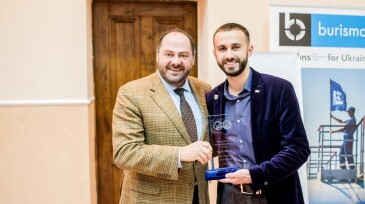
Yurii Moroz, SPE, reflects on his career journey from field operations to leading new energy project management including hydrogen, geothermal, CRM, and CCS projects at Ukraine’s largest state-owned gas company.
-
David Nnamdi, SPE, speaks about his work as a data scientist and engineer, his development of Sequestrix, an open-source CO2 transport network optimization tool, and where he sees data science and AI’s role in the future of sustainable energy.




Page 1 of 2