Digital Transformation

Discover how AI and machine learning are transforming oil and gas field development by reducing subsurface uncertainty, optimizing development decisions, and maximizing long-term reservoir value from concept selection through production.

As upstream operators move beyond isolated experiments, the hardest part of the AI journey is not building a model, it is making it stick.

How 7 decades of AI research, including the emergence of agentic AI, are reshaping oil, gas, renewables, and the grid.
-
 The company is investing $1 billion to establish the Engineering and Innovation Excellence Center (ENGINE) in Bengaluru, India.
 -
Subsurface modeling and history matching are critical steps for driving decisions. Generative artificial intelligence can support these efforts by incorporating various sources of information and allowing for low-dimensional parameterization for history matching.
-
Join TWA Editorial Board member Mani Bansal as he interviews Ashish Fatnani, an industry professional with 12 years of experience working for companies including Halliburton, ONGC, and Mercedes Benz.
-
The SPE Gulf Coast Section Data Analytics Group and Fervo Energy invite you to participate in the Machine Learning Challenge 2025 on 21 March.
-
The portal includes SPE resources like OnePetro, PetroWiki, JPT, Energy Stream, and SPE journals which can be easily searched using i2k Connect's AI-driven technology.
-
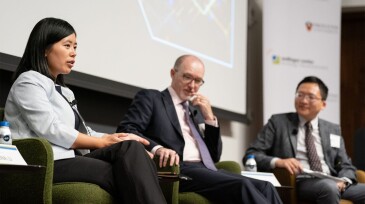
Experts from various fields met to discuss the role of AI in the energy transition and its challenges including high energy consumption and carbon-intensive infrastructure requirements.
-
Join TWA Editorial Board member Md Imtiaz as he interviews ONGC’s Western Offshore Asset Executive Director Ravi Shankar.
-
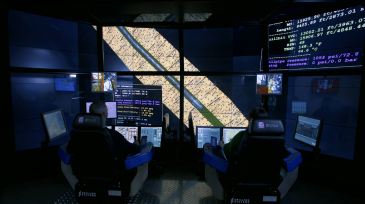
As video game technology has evolved, so have the ways in which this technology can be used in the oil and gas industry.
-
Five key themes to AI's success including standardization, automation, integration, scalability, and continuous improvement can provide a clear roadmap for effective AI deployment, addressing challenges and driving sustainability across the subsurface energy sector.
-
Tune in 28 October for a discussion with SPE Technical Directors about the future of data science for professionals in the energy sector.