

Data & Analytics

This introduction to mixed integer linear programming explains how engineers can model operational constraints, optimize production systems, and improve decision-making across oil and gas facilities.

This article from Murphy Oil outlines a modernization effort that resulted in increased scenario simulation capacity by five to 10 times.

The emerging vision is an industry where engineers focus on judgment, risk assessments, and accountability.
-
 Case studies from around the world prove that big rewards await companies that optimize the artificial lift systems keeping their mature fields alive. The success stories involve a mix of monitoring, automation, and performance tracking.
-
Saudi Aramco is on a mission to increase the amount of seismic data that it collects by fourfold, while reducing costs and acquisition time by half of what it spends today.
-
It has been an impressive comeback for a technology that once stood on the brink of failure. The upstream oil and gas industry has largely resolved crippling technical challenges that shortened the life of fiber-optic cables in downhole applications and is now working on a big encore.
-
Some of the world’s largest exploration and production companies say the big bets they have placed on high-performance computing over the past several years are set to pay off.
-
Robotic submarines, capable of operating by themselves thousands of feet underwater for months or perhaps years at a time, are under development as the vanguard of tomorrow’s subsea oil and gas fields.
-
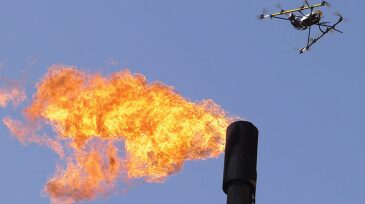
Unmanned aircraft are finding their place in the oil and gas industry by providing aerial geologic modeling to address reservoir-related challenges and making inspections safer.
-
Industry has developed smart completions, smart wells, and smart fields. The next frontier is real-time reservoir management (RTRM) using all of the data from smart installations, as well as artificial intelligence.






Page 20 of 20