

Data & Analytics

Digital drilling technologies are enabling a shift toward more predictive, efficient, and sustainable operations.

Breakthroughs in energy, similar to those seen in AI, require coordinated progress across multiple fields and the resolution of structural bottlenecks. As a result, a successful energy transition depends on integrated advances in infrastructure, policy, technology, and investment rather than isolated efforts.

The Genesis Mission is a US Department of Energy initiative that integrates AI, national labs, and cross-sector collaboration to accelerate scientific discovery, strengthen energy innovation, and enhance national security.
-
 It has been an impressive comeback for a technology that once stood on the brink of failure. The upstream oil and gas industry has largely resolved crippling technical challenges that shortened the life of fiber-optic cables in downhole applications and is now working on a big encore.
 -
Some of the world’s largest exploration and production companies say the big bets they have placed on high-performance computing over the past several years are set to pay off.
-
Robotic submarines, capable of operating by themselves thousands of feet underwater for months or perhaps years at a time, are under development as the vanguard of tomorrow’s subsea oil and gas fields.
-
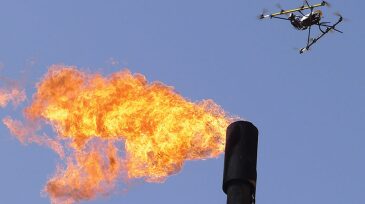
Unmanned aircraft are finding their place in the oil and gas industry by providing aerial geologic modeling to address reservoir-related challenges and making inspections safer.
-
Industry has developed smart completions, smart wells, and smart fields. The next frontier is real-time reservoir management (RTRM) using all of the data from smart installations, as well as artificial intelligence.




Page 18 of 18