Digital Transformation

How AI-powered well planning is transforming field development by accelerating trajectory design, reducing drilling risk, optimizing costs, and helping engineers deliver safer, more efficient wells.

Discover how AI leader Fatai Anifowose transformed skepticism into innovation, sharing insights on artificial intelligence in energy, leadership, continuous learning, and the skills shaping the future of the industry.

Utkarsh Sinha, 2026 TWA Energy Influencer, is driving innovation at the intersection of reservoir physics and AI, combining research, patents, and industry leadership to develop practical machine learning solutions that improve reservoir and production engineering decision-making.
-
 Autonomous underwater vehicles (AUVs) have demonstrated their capabilities during the search for Malaysian Airlines flight 370 in the Indian Ocean.
 -
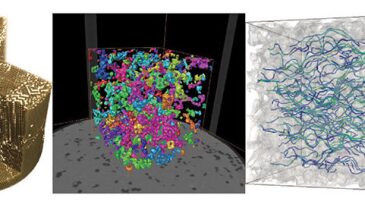
In an effort to foster collaboration in an area where there is currently very little, researchers at the University of Texas at Austin (UT) created a new web-based application for storing and sharing CT images of rocks.
-
Pulled directly from the reservoir rock, core samples provide critical data used to determine how exploration should proceed. Until recently, core analysis remained old school, however, there is an ongoing transition to bring the process of core description into the digital age.
-
Case studies from around the world prove that big rewards await companies that optimize the artificial lift systems keeping their mature fields alive. The success stories involve a mix of monitoring, automation, and performance tracking.
-
Saudi Aramco is on a mission to increase the amount of seismic data that it collects by fourfold, while reducing costs and acquisition time by half of what it spends today.
-
It has been an impressive comeback for a technology that once stood on the brink of failure. The upstream oil and gas industry has largely resolved crippling technical challenges that shortened the life of fiber-optic cables in downhole applications and is now working on a big encore.
-
Some of the world’s largest exploration and production companies say the big bets they have placed on high-performance computing over the past several years are set to pay off.
-
Robotic submarines, capable of operating by themselves thousands of feet underwater for months or perhaps years at a time, are under development as the vanguard of tomorrow’s subsea oil and gas fields.
-
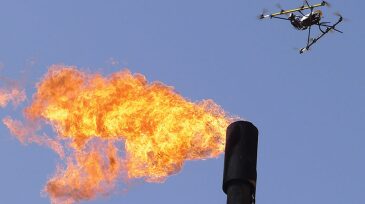
Unmanned aircraft are finding their place in the oil and gas industry by providing aerial geologic modeling to address reservoir-related challenges and making inspections safer.
-
Surya Rajan, a director at IHS Cambridge Energy Research Associates (CERA), discusses the drivers for innovation in oil and gas along with expected areas for technology development.