Digital Transformation

This introduction to mixed integer linear programming explains how engineers can model operational constraints, optimize production systems, and improve decision-making across oil and gas facilities.

Former TWA Editor in Chief Aman Srivastava, SPE, shares lessons on leadership, continuous learning, digital transformation, and the lasting impact of SPE volunteer service.

AI and machine learning are transforming drilling execution, detecting downhole problems earlier, automating reporting, and closing the loop between the wellbore and the well plan through real-time geosteering.
-
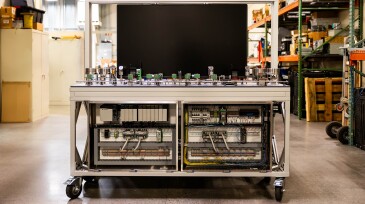
 Tiger Skid, a custom-built cyber-physical training and testing platform, simulates real-world energy systems and industrial processes vulnerable to cyber-physical attacks.
-
As the energy sector rapidly evolves to address climate change, tools such as the En-ROADS Climate Solutions Simulator are essential for young professionals seeking to understand the complexities of the transition and make informed, impactful decisions.
-
Artificial intelligence is transforming—not replacing—petroleum engineering. As AI-driven, data-centric methods replace traditional deterministic models, engineers must adapt by acquiring skills in data science, algorithmic thinking, and software tools. The industry’s evolution raises a critical question: Will petroleum engineers evolve with these changes or risk beco…
-
Digital transformation in the oil and gas industry is likened to a major home renovation—requiring a clear vision, skilled collaboration, patience, and investment in lasting solutions. Though the process is challenging, the end goal is an improved, future-ready operation.
-
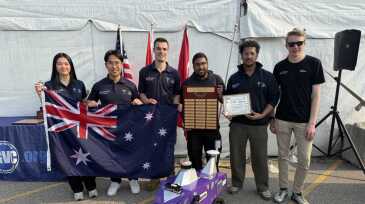
Students at the Melbourne, Australia, university took home first place at the 32nd US-based Intelligent Ground Vehicle Competition.
-
The university will join a small number of institutions in the US offering an undergraduate degree focused exclusively on artificial intelligence.
-
The report highlights the fast evolution of AI with better performance, bigger investment, and rising global optimism. But job concerns, education gaps, and environmental costs reveal a more complex picture.
-
The company is investing $1 billion to establish the Engineering and Innovation Excellence Center (ENGINE) in Bengaluru, India.
-
Subsurface modeling and history matching are critical steps for driving decisions. Generative artificial intelligence can support these efforts by incorporating various sources of information and allowing for low-dimensional parameterization for history matching.
-
Join TWA Editorial Board member Mani Bansal as he interviews Ashish Fatnani, an industry professional with 12 years of experience working for companies including Halliburton, ONGC, and Mercedes Benz.