Energy Transition

Part two of this three-part series explores the history of 10 years, 2005 to 2014, of the UN Climate Change Conference of the Parties.

The energy transition is often portrayed as linear, but recent geopolitical tensions and market uncertainties show that the shift to a low-carbon future will be complex and shaped by multiple, interconnected pressures.

Liu shares her career experiences as it spans biomedical engineering, multiphase flow measurement in oil and gas, and emissions quantification.
-
 LSU will soon be home to a new CO2 research well where students, researchers, and industry professionals will have the opportunity to study CO2 behavior under realistic conditions.
 -
The university will receive funding for two decarbonization research initiatives.
-
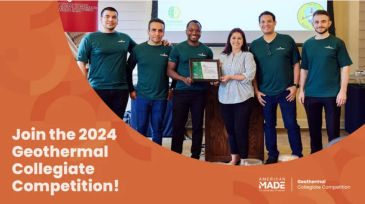
The annual competition allows students to gain real-world experience in both the technical and policymaking aspects of geothermal energy.
-
Unlocked capital for sustainability initiatives is imperative for an equitable energy transition.
-
The evolution of CCS faces significant challenges. However, prioritizing cost reduction, efficiency improvements, and renewable energy integration will enable CCS to realize its potential in a sustainable, low-carbon future.
-
Change is inevitable, but the resistance to it, especially in cultural and monetary contexts, can be profound. The deep-rooted dependency on crude oil and internal combustion engines exemplifies this inertia, raising questions about how we might transition to new energy sources without overhauling our entire infrastructure.
-
To reduce the impact of greenhouse-gas emissions to an exemplary level, one must apply the sustainable tools the planet Earth already has in smarter and faster ways.
-
The Master of Energy Transition and Sustainability program will begin this fall at the Houston-based university.
-
The energy transition, one of the main topics of the decade, deals with the possibility of producing clean energy while minimizing the impact on people’s behavior. However, one indicator of the amount of energy we use is revealed by the number of lights turned on at night.
-
The funding offers students the opportunity for hands-on experience to turn their creative design and engineering ideas into reality, while also helping solve real-world environmental challenges.