Energy Transition

Academic research can help bridge the gap between innovation and industry. In this interview, 2026 TWA Energy Influencer Sherif Fakher, SPE, reflects on his experiences in academia, SPE, and the importance of collaboration, innovation, and rethinking waste as a resource in the transition to a more sustainable energy future.

Can hydrogen transform Nigeria’s energy future? By leveraging its vast natural gas, solar, and hydropower resources, Nigeria has a unique opportunity to overcome energy poverty, drive industrial growth, and emerge as Africa’s leading hydrogen economy.

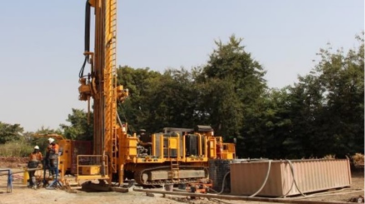
Texas A&M Researchers To Develop AI-Powered Drilling System To Accelerate Critical Mineral Discovery
Backed by a $3.5 million US Department of Energy grant, Texas A&M researchers are developing an AI-enabled drilling system that can identify critical minerals in real time, reducing exploration time and costs for rare earth element deposits.
-
 The degree includes curricula in energy drilling, geothermal and petroleum production, renewable systems, and carbon capture.
 -
KU will use its funding from the DOE's Bipartisan Infrastructure Law to develop new catalysts and technologies to improve the efficiency and reliability of green hydrogen production.
-
Join TWA's Mrigya Fogat as she interviews four of the 2024 TWA Energy Influencers in this Get to Know series.
-
Five key themes to AI's success including standardization, automation, integration, scalability, and continuous improvement can provide a clear roadmap for effective AI deployment, addressing challenges and driving sustainability across the subsurface energy sector.
-
Funding from the grant will be used to develop innovative heating, ventilation, air-conditioning, and refrigeration systems, reduce hydrofluorocarbons emissions, and combat climate change by improving refrigerant technology.
-
Learn about natural hydrogen accumulation systems and the relatively minor differences in the setting and exploration processes compared to natural gas exploration.
-
Twenty positions are available for the 2024 Geothermal Energy from Oil and Gas Demonstrated Engineering (GEODE) Internship Program. Deadline: 31 October 2024.
-
LSU will soon be home to a new CO2 research well where students, researchers, and industry professionals will have the opportunity to study CO2 behavior under realistic conditions.
-
The university will receive funding for two decarbonization research initiatives.
-
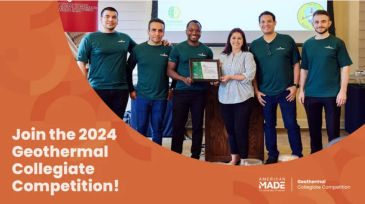
The annual competition allows students to gain real-world experience in both the technical and policymaking aspects of geothermal energy.