

Production

In part one of this two-part series, explore five underdeveloped US shale and tight-rock plays, from the Tuscaloosa Marine Shale to the Brown Dense, and discover why proven hydrocarbons and successful wells have yet to translate into repeatable unconventional development.

Rock sample characterization, widely used in hydrocarbon exploration and production, is emerging as a critical tool for understanding and optimizing subsurface mineral extraction through in-situ leaching.

Energy security in today’s oil and gas industry goes beyond production—maritime logistics and resilient energy transport networks are emerging as the next critical competitive advantage.
-
 After a year of field testing, a new type of biopolymer developed by Wintershall, Germany’s largest oil and gas producer, is showing promise as an effective enhanced oil recovery (EOR) tool in one of the country’s longest producing oil fields.
 -
Issues associated with mercury’s presence in hydrocarbon processing systems have become more apparent as deeper and hotter reservoirs (often with higher levels of mercury) were exploited, and with the low-temperature gas processing used for liquefied natural gas (LNG) and natural gas liquids.
-
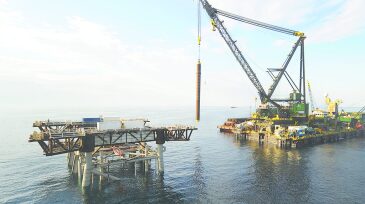
Regulations are driving increased decommissioning activities in the Gulf of Mexico. Incomplete data is one of the obstacles in planning decommissioning. As fields have changed ownership over time, key information has been lost, creating challenges for the current operator.

Page 8 of 8