

Technology

A data-driven look at fuel savings, battery degradation, and net CO2 impact over a 10-year ownership period.

In an industry that rarely slows down, memory can be a powerful engineering tool. Not in terms of nostalgia, but in perspective. Many of the activities that constituted daily operations have been so deeply transformed that new generations of engineers may never have experienced them before.
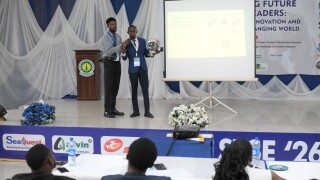
A smart safety helmet with physiological monitoring, gas detection, and real-time location tracking for emergencies was the winning concept at this year's SPE Students Technical Symposium and Exhibition.
-
 This article examines how domain experts can use no-code ML platforms to explore decision-relevant problems, validate hypotheses, quickly build prototypes, and engage more effectively with data science teams when solutions transition toward production.
 -
Over the past decade, oilfield service companies have transformed logging-while-drilling (LWD) development into a faster, collaborative, system-level process that delivers improved reliability from the first run and makes development philosophy as important as the technology itself.
-
Saipem's center includes a full-scale simulator designed to replicate real operational scenarios to deliver an immersive training experience.
-
EZOps will integrate its Mobile Oilfield Management platform into the college’s energy technology program, giving students hands-on experience with digital tools used in modern oilfield operations.
-
The software will enhance education and research across energy, geothermal, mining, and geotechnical engineering by giving students and faculty hands-on access to industry-standard tools used worldwide.
-
AI is transforming oil and gas, but the real change will come from young professionals (YPs) who bridge technology and field expertise. By leading pilots, building networks, and challenging old assumptions, YPs can drive the industry’s digital transformation from within.
-
PE Ltd.'s software will allow students and faculty to work directly with modeling technologies and build real-world, job-ready skills.
-
Founding dean of Missouri S&T’s Kummer College, James D. Sterling, sat down with Joshua Schlegel, associate professor and associate chair of nuclear engineering and radiation science, to discuss why nuclear power is making a comeback and what its resurgence means for the future of energy.
-
In this interview, Purohit explains why ultrasonic technology is rising as a dominant solution for gas-flow applications and how engineering teams can approach measurement as a tool not just for accountability but also for operational excellence.
-
Microgrids are no longer niche innovations—they have become a foundational component of modern energy infrastructure. Realizing their full potential will require targeted policy reform, clearer regulatory frameworks, and greater access to innovative financing models.




Page 1 of 32