Data & Analytics

How AI-powered well planning is transforming field development by accelerating trajectory design, reducing drilling risk, optimizing costs, and helping engineers deliver safer, more efficient wells.

2026 TWA Energy Influencer Muhammad Karimi shares how he transformed academic research into a globally deployed energy technology, offering insights on innovation, entrepreneurship, oilfield digitalization, and the energy transition.

Discover how AI leader Fatai Anifowose transformed skepticism into innovation, sharing insights on artificial intelligence in energy, leadership, continuous learning, and the skills shaping the future of the industry.
-
 The fifth edition of the SPE Europe Energy GeoHackathon, beginning on 1 October, focuses on how data science can advance geothermal energy and drive the energy transition.
 -
AI is beginning to transform well management by helping engineers predict electrical submersible pump failures before they happen, optimize drawdown more efficiently, and generate reliable forecasts even when data is scarce or noisy.
-
The oil and gas industry's shift to smart fields—driven by automation, AI, and real-time data—requires petroleum engineers to master digital technologies alongside traditional skills.
-
Part 1 of this series focuses on the disciplines of geology and geophysics, petrophysics, and reservoir engineering using real-world field examples from Malaysia and the author's experiences in training undergraduate students in Malaysian universities.
-
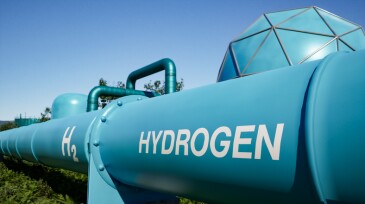
This article explores the integration of hydrogen into existing natural gas infrastructure and introduces practical solutions, including the application of machine learning models, to support decision-making and infrastructure adaptation in the energy transition.
-
Artificial intelligence is transforming—not replacing—petroleum engineering. As AI-driven, data-centric methods replace traditional deterministic models, engineers must adapt by acquiring skills in data science, algorithmic thinking, and software tools. The industry’s evolution raises a critical question: Will petroleum engineers evolve with these changes or risk beco…
-
This research developed a clear framework for assessing and selecting fit-for-purpose software. The study focuses on the role of a data-driven approach in the decision process, with application to operational software systems in the oil and gas industry.
-
Digital transformation in the oil and gas industry is likened to a major home renovation—requiring a clear vision, skilled collaboration, patience, and investment in lasting solutions. Though the process is challenging, the end goal is an improved, future-ready operation.
-
The SPE Reservoir Technical Discipline and Advisory Committee invite their Reservoir members worldwide to participate in a new survey aimed at assessing the current state of reservoir engineering across industry and academia. Deadline is 21 July 2025.
-
Mineralogical, mechanical, and flow complexities in major US shale plays are tightly linked, making traditional 1D modeling inadequate. Emmanuel Obasi, SPE, addresses this with a physics-informed ML approach detailed in this article.