Data & Analytics

In an industry that rarely slows down, memory can be a powerful engineering tool. Not in terms of nostalgia, but in perspective. Many of the activities that constituted daily operations have been so deeply transformed that new generations of engineers may never have experienced them before.

Machine learning is transforming equipment reliability by enabling predictive maintenance, improving safety, and reducing costly downtime across drilling, production, pipelines, and CCUS operations.

This article explores how AI is transforming oil and gas operations, including its real impact on methane reduction, predictive maintenance, energy efficiency, and whether it truly delivers measurable sustainability gains or just adds complexity.
-
 On long-term trends, most things in the world are getting better, but gradual improvements don't make the news.
 -
Subsurface modeling and history matching are critical steps for driving decisions. Generative artificial intelligence can support these efforts by incorporating various sources of information and allowing for low-dimensional parameterization for history matching.
-
TWA editors met with Satyam Priyadarshy, a technology fellow and chief data scientist at Halliburton, about how young professionals can prepare themselves for the application of data science in their work and how to approach problems and challenges.
-
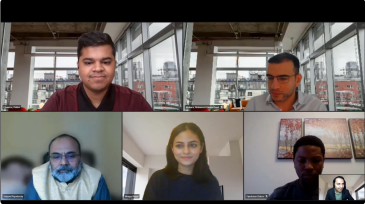
Join TWA Editorial Board member Mani Bansal as he interviews Ashish Fatnani, an industry professional with 12 years of experience working for companies including Halliburton, ONGC, and Mercedes Benz.
-
The SPE Gulf Coast Section Data Analytics Group and Fervo Energy invite you to participate in the Machine Learning Challenge 2025 on 21 March.
-
The portal includes SPE resources like OnePetro, PetroWiki, JPT, Energy Stream, and SPE journals which can be easily searched using i2k Connect's AI-driven technology.
-
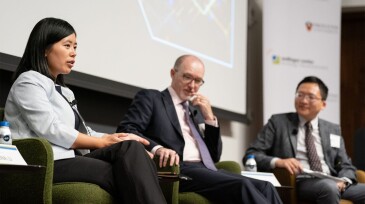
Experts from various fields met to discuss the role of AI in the energy transition and its challenges including high energy consumption and carbon-intensive infrastructure requirements.
-
Join TWA Editorial Board member Md Imtiaz as he interviews ONGC’s Western Offshore Asset Executive Director Ravi Shankar.
-
As the pace of data collection accelerates in the oil and gas industry, the ability to understand and perform statistical analysis becomes increasingly valuable. Professionals who lack a background in statistics can focus on key concepts to improve their understanding.
-
Join TWA's Mrigya Fogat as she interviews four of the 2024 TWA Energy Influencers in this Get to Know series.