

Data & Analytics

Operational drift in oil and gas starts with small, undocumented deviations that compound over time, making real-time visibility, digital workflows, and frontline execution data critical for preventing safety incidents, compliance failures, and costly operational disruptions.

Discover how AI and machine learning are transforming oil and gas field development by reducing subsurface uncertainty, optimizing development decisions, and maximizing long-term reservoir value from concept selection through production.

As upstream operators move beyond isolated experiments, the hardest part of the AI journey is not building a model, it is making it stick.
-
 Some of the world’s largest exploration and production companies say the big bets they have placed on high-performance computing over the past several years are set to pay off.
 -
Robotic submarines, capable of operating by themselves thousands of feet underwater for months or perhaps years at a time, are under development as the vanguard of tomorrow’s subsea oil and gas fields.
-
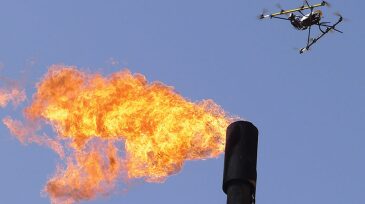
Unmanned aircraft are finding their place in the oil and gas industry by providing aerial geologic modeling to address reservoir-related challenges and making inspections safer.
-
Industry has developed smart completions, smart wells, and smart fields. The next frontier is real-time reservoir management (RTRM) using all of the data from smart installations, as well as artificial intelligence.



Page 19 of 19