

Digital Oil Field

Discover how AI and machine learning are transforming oil and gas field development by reducing subsurface uncertainty, optimizing development decisions, and maximizing long-term reservoir value from concept selection through production.

As upstream operators move beyond isolated experiments, the hardest part of the AI journey is not building a model, it is making it stick.

In an industry that rarely slows down, memory can be a powerful engineering tool. Not in terms of nostalgia, but in perspective. Many of the activities that constituted daily operations have been so deeply transformed that new generations of engineers may never have experienced them before.
-
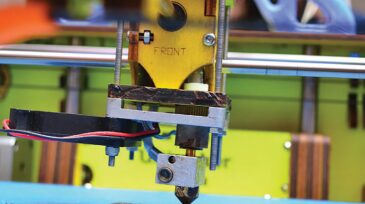
 Researchers at Heriot-Watt University in Edinburgh, Scotland, are building replica core samples using 3D printers and installing sensors inside them as they go. Their goal is to directly monitor pore-scale flow behavior from the inside of these so-called “smart rocks.”
 -
Case studies from around the world prove that big rewards await companies that optimize the artificial lift systems keeping their mature fields alive. The success stories involve a mix of monitoring, automation, and performance tracking.
-
It has been an impressive comeback for a technology that once stood on the brink of failure. The upstream oil and gas industry has largely resolved crippling technical challenges that shortened the life of fiber-optic cables in downhole applications and is now working on a big encore.
-
Industry has developed smart completions, smart wells, and smart fields. The next frontier is real-time reservoir management (RTRM) using all of the data from smart installations, as well as artificial intelligence.



Page 3 of 3