Production

In part one of this two-part series, explore five underdeveloped US shale and tight-rock plays, from the Tuscaloosa Marine Shale to the Brown Dense, and discover why proven hydrocarbons and successful wells have yet to translate into repeatable unconventional development.

Rock sample characterization, widely used in hydrocarbon exploration and production, is emerging as a critical tool for understanding and optimizing subsurface mineral extraction through in-situ leaching.

Energy security in today’s oil and gas industry goes beyond production—maritime logistics and resilient energy transport networks are emerging as the next critical competitive advantage.
-
 The complicated parent-child relationship in US shale fields is emerging as a turning point in the US shale revolution. One of the first executives to exploit tight oil says the issue will reverse the sector’s cumulative growth rate by 2025.
 -
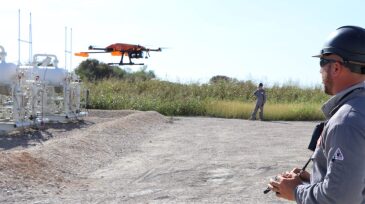
The two technology startups aim to bring scale to the visual side of oilfield automation with a new deal that will cover 90% of US energy assets.
-
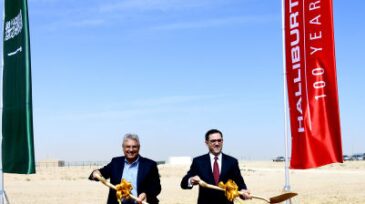
Halliburton broke ground in Saudi Arabia for the first oilfield chemical manufacturing reaction plant in the Kingdom.
-
The backing of one of the world’s largest oil and gas companies aims to put this emerging digital technology on the path to widespread adoption.
-
An oil and gas startup has attracted the business with a major operator thanks to its ability to forecast whether production-enhancing chemicals will work as advertised.
-
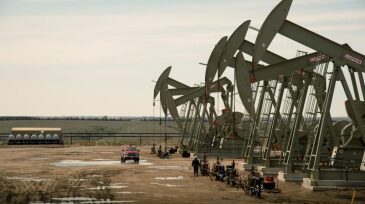
Hundreds of rod-lift wells in North Dakota are about to get a big upgrade.
-
Venture groups spend their time evaluating hundreds of companies each year to only make a handful of investments. These two cover interesting ends of the upstream spectrum: aerial drones and downhole artificial lift.
-
Tiny soil samples may contain as many as 300,000 species of microbial life, but a Netherlands-based startup has figured out that between 50 and 200 of them can tell an operator if a drilling location will hold oil and gas reserves.
-
Onshore and offshore production in Texas and the Gulf of Mexico continues to recover to pre-Hurricane Harvey levels as inspections and assessments of damages are done. Operators have not reported major damages resulting in extended shut-ins.
-
Oil and gas production in the Gulf of Mexico have each gone up 10% since yesterday as Harvey continues to weaken and move northeast toward the Ohio Valley. Widespread flooding is expected to continue in Texas and toward the Louisiana border through the weekend.