R&D/innovation

More than 400 industry leaders convened in Mumbai to explore cutting-edge technologies, digital innovation, and EOR strategies aimed at revitalizing India’s mature hydrocarbon fields and strengthening national energy security.

The agreement will focus on advancing development and use of the nation's hydrocarbon and geothermal energy resources.
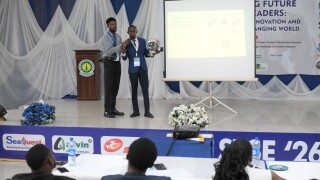
A smart safety helmet with physiological monitoring, gas detection, and real-time location tracking for emergencies was the winning concept at this year's SPE Students Technical Symposium and Exhibition.
-
 Led by OSU's Prem Bikkina, SPE, the research focuses on compiling and analyzing geological and geochemical data to estimate white hydrogen availability in Oklahoma and surrounding states.
 -
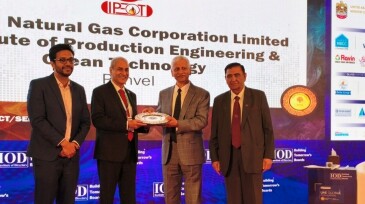
Rajiv Nischal, head of ONGC’s Institute of Production Engineering and Ocean Technology (IPEOT), shares the company's latest developments in technology, sustainability, safety, and more.
-
In this interview, Purohit explains why ultrasonic technology is rising as a dominant solution for gas-flow applications and how engineering teams can approach measurement as a tool not just for accountability but also for operational excellence.
-
David Nnamdi, SPE, speaks about his work as a data scientist and engineer, his development of Sequestrix, an open-source CO2 transport network optimization tool, and where he sees data science and AI’s role in the future of sustainable energy.
-
Microgrids are no longer niche innovations—they have become a foundational component of modern energy infrastructure. Realizing their full potential will require targeted policy reform, clearer regulatory frameworks, and greater access to innovative financing models.
-
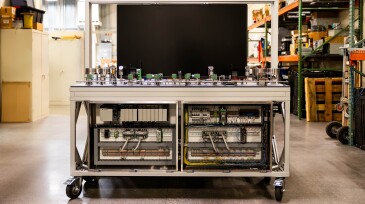
Tiger Skid, a custom-built cyber-physical training and testing platform, simulates real-world energy systems and industrial processes vulnerable to cyber-physical attacks.
-
As the energy sector rapidly evolves to address climate change, tools such as the En-ROADS Climate Solutions Simulator are essential for young professionals seeking to understand the complexities of the transition and make informed, impactful decisions.
-
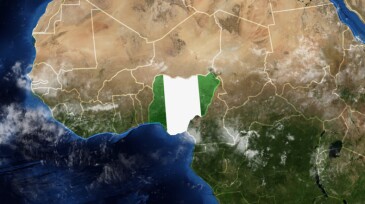
A study employed a rigorous mathematical model to estimate the quantity of recoverable geothermal heat in Nigeria’s subsurface formations.
-
Mineralogical, mechanical, and flow complexities in major US shale plays are tightly linked, making traditional 1D modeling inadequate. Emmanuel Obasi, SPE, addresses this with a physics-informed ML approach detailed in this article.
-
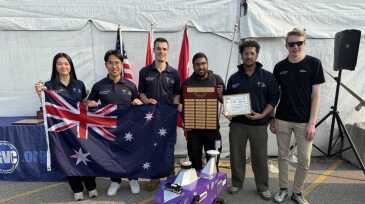
Students at the Melbourne, Australia, university took home first place at the 32nd US-based Intelligent Ground Vehicle Competition.