Data & Analytics

The emerging vision is an industry where engineers focus on judgment, risk assessments, and accountability.
AI and machine learning are transforming drilling execution, detecting downhole problems earlier, automating reporting, and closing the loop between the wellbore and the well plan through real-time geosteering.

Robotic and autonomous systems are transforming energy operations, but their full value emerges only when paired with data science, engineering analytics, and AI/ML to turn data into decisions. The transition of the SPE Robotic & Autonomous Systems Technical Section into the SPE Data Science & Engineering Analytics Technical Section helps bridge this critical technolo…
-
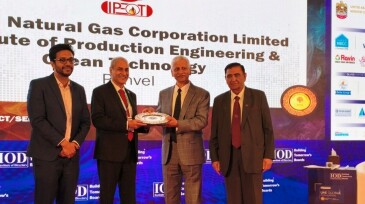
 Rajiv Nischal, head of ONGC’s Institute of Production Engineering and Ocean Technology (IPEOT), shares the company's latest developments in technology, sustainability, safety, and more.
-
With a record-breaking number of participants, this year's datathon proved that collaboration is the catalyst, data is the tool, and innovation is the outcome.
-
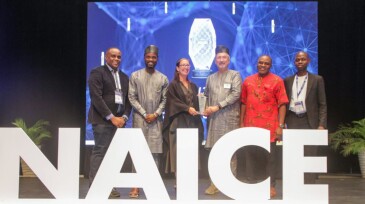
David Nnamdi, SPE, speaks about his work as a data scientist and engineer, his development of Sequestrix, an open-source CO2 transport network optimization tool, and where he sees data science and AI’s role in the future of sustainable energy.
-
The fifth edition of the SPE Europe Energy GeoHackathon, beginning on 1 October, focuses on how data science can advance geothermal energy and drive the energy transition.
-
AI is beginning to transform well management by helping engineers predict electrical submersible pump failures before they happen, optimize drawdown more efficiently, and generate reliable forecasts even when data is scarce or noisy.
-
The oil and gas industry's shift to smart fields—driven by automation, AI, and real-time data—requires petroleum engineers to master digital technologies alongside traditional skills.
-
Part 1 of this series focuses on the disciplines of geology and geophysics, petrophysics, and reservoir engineering using real-world field examples from Malaysia and the author's experiences in training undergraduate students in Malaysian universities.
-
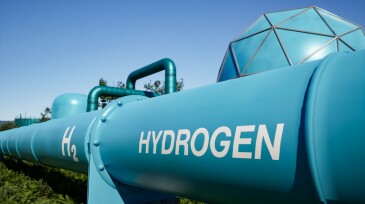
This article explores the integration of hydrogen into existing natural gas infrastructure and introduces practical solutions, including the application of machine learning models, to support decision-making and infrastructure adaptation in the energy transition.
-
Artificial intelligence is transforming—not replacing—petroleum engineering. As AI-driven, data-centric methods replace traditional deterministic models, engineers must adapt by acquiring skills in data science, algorithmic thinking, and software tools. The industry’s evolution raises a critical question: Will petroleum engineers evolve with these changes or risk beco…
-
This research developed a clear framework for assessing and selecting fit-for-purpose software. The study focuses on the role of a data-driven approach in the decision process, with application to operational software systems in the oil and gas industry.