

Technology

A data-driven look at fuel savings, battery degradation, and net CO2 impact over a 10-year ownership period.

In an industry that rarely slows down, memory can be a powerful engineering tool. Not in terms of nostalgia, but in perspective. Many of the activities that constituted daily operations have been so deeply transformed that new generations of engineers may never have experienced them before.
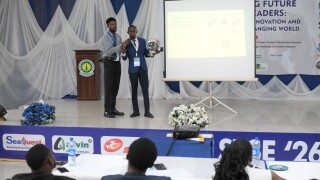
A smart safety helmet with physiological monitoring, gas detection, and real-time location tracking for emergencies was the winning concept at this year's SPE Students Technical Symposium and Exhibition.
-
 One of the more important aspects of well integrity during drilling operations is early kick detection. Recently, new technologies and re-search have been applied or developed to improve the kick-detection systems and to overcome some of the difficulties.
 -
Oil and gas by-products can make good construction materials and can reduce CO2 emission from cement production.
-
Your bit is at 76° inclination, your true vertical depth (TVD) at that 8200 ft, and your target is 90° and a TVD of 8320 ft.
-
Eight latest trends in hydraulic fracturing.
-
There is a new social context for energy...How do we go and create a dialogue to change perception, to enable permission to create growth?
-
A number of ongoing industry research projects are developing nanoparticles that work at the reservoir level and for fluid treatment. Though they may be a few years away from finalization, these efforts highlight nanotechnology’s increasingly sophisticated and growing application scope.
-
What does it take to start your own company using the latest technology? Interview of entrepreneurs Peter Duncan of MicroSeismic and Dakin Sloss of Tachyus.
-
Drillpipe doesn’t last forever, but a Houston-area startup company says it has developed a way to make it last significantly longer.
-
In Part II of this series, Antonio Pinto, senior advisor, and Celso Branco, reservoir engineer, of Petrobras discuss advances in deep offshore drilling related to the enormous Santos pre-salt basin fields of Brazil.
-
SPE President Janeen Judah's column in November JPT discusses what's the next big thing for the industry.


