

Technology

A data-driven look at fuel savings, battery degradation, and net CO2 impact over a 10-year ownership period.

In an industry that rarely slows down, memory can be a powerful engineering tool. Not in terms of nostalgia, but in perspective. Many of the activities that constituted daily operations have been so deeply transformed that new generations of engineers may never have experienced them before.
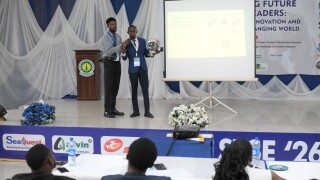
A smart safety helmet with physiological monitoring, gas detection, and real-time location tracking for emergencies was the winning concept at this year's SPE Students Technical Symposium and Exhibition.
-
 Managing a portfolio of high-impact technologies as an integrated project is Chevron's recipe for success in the deepwater Wilcox in the Gulf of Mexico.
 -
Advances in drilling and reaming with casing or liners (DwC, DwL, RwC, and RwL) are yielding unprecedented capabilities in well design and construction.
-
TWA Editor Todd Willis discusses the importance of deep water and the articles in this issue.
-
The first wells used to search for oil were drilled more than 150 years ago.
-
Alain C. Gringarten, Imperial College London discusses well testing -- why, how, and most importantly, how results are interpreted.
-
An interview with Joe Leimkuhler of Shell and Greg Leveille of ConocoPhillips on unconventional resources development.
-
Alberto Di Lullo, Eni E&P, discusses flow assurance engineering and the challenges that those working in flow assurance address.
-
Kishore K. Mohanty of the University of Texas at Austin talks about technologies that can help industry meet energy demands without harming the environment.
-
Shale acts both as source rock and reservoir rock. Gas production in commercial quantities requires the presence of fractures to provide permeability. It also requires getting the gas in the shale to release through desorption.
-
In this issue, we take a look at those technologies that seem intangible, but will be part of the standard oilfield tool box in years to come. We are talking about nanotechnology, the expansion of the digital era, automation solutions, and the exploitation of “new” resources in harsh environments.


