Technology

A data-driven look at fuel savings, battery degradation, and net CO2 impact over a 10-year ownership period.

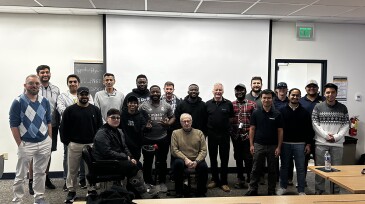
In an industry that rarely slows down, memory can be a powerful engineering tool. Not in terms of nostalgia, but in perspective. Many of the activities that constituted daily operations have been so deeply transformed that new generations of engineers may never have experienced them before.
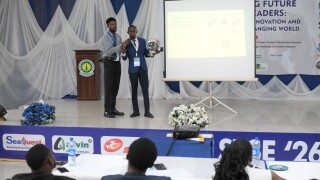
A smart safety helmet with physiological monitoring, gas detection, and real-time location tracking for emergencies was the winning concept at this year's SPE Students Technical Symposium and Exhibition.
-
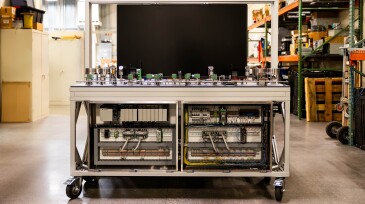
 Tiger Skid, a custom-built cyber-physical training and testing platform, simulates real-world energy systems and industrial processes vulnerable to cyber-physical attacks.
 -
As the energy sector rapidly evolves to address climate change, tools such as the En-ROADS Climate Solutions Simulator are essential for young professionals seeking to understand the complexities of the transition and make informed, impactful decisions.
-
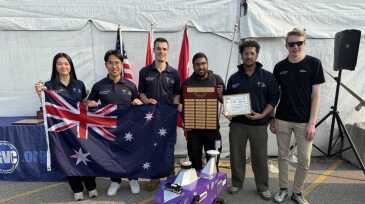
Students at the Melbourne, Australia, university took home first place at the 32nd US-based Intelligent Ground Vehicle Competition.
-
The multiplayer training platform developed by the Texas A&M Mary Kay O'Connor Process Safety Center and EnerSys Corp. uses artificial intelligence and gaming technology to simulate pipeline emergencies.
-
Rock Flow Dynamics' donation of its tNavigator software will benefit WVU students studying petroleum engineering, geology, and earth and environmental sciences.
-
The report highlights the fast evolution of AI with better performance, bigger investment, and rising global optimism. But job concerns, education gaps, and environmental costs reveal a more complex picture.
-
The data include high-resolution spatial layers for environmental research, monitoring, and geospatial analysis.
-
The company is investing $1 billion to establish the Engineering and Innovation Excellence Center (ENGINE) in Bengaluru, India.
-
Four technologies included in the Global CCS Institute's latest CCS Technologies 2024 report are explored in this article.
-
Subsurface modeling and history matching are critical steps for driving decisions. Generative artificial intelligence can support these efforts by incorporating various sources of information and allowing for low-dimensional parameterization for history matching.