Data & Analytics

Proxy models are transforming reservoir management by enabling engineers to rapidly evaluate and optimize thousands of operating scenarios, helping improve CO2-EOR, carbon storage, geothermal, and underground gas storage decisions while keeping high-fidelity reservoir simulation at the core of validation.

In this interview, Sushma Bhan, energy data, AI leader, and technical director of the SPE Data Science and Engineering Analytics Technical Section, shares lessons from 3 decades at Shell, discussing digital transformation, the future of AI in upstream operations, leadership development, and career advice for the next generation of energy professionals.

Texas A&M Researchers To Develop AI-Powered Drilling System To Accelerate Critical Mineral Discovery
Backed by a $3.5 million US Department of Energy grant, Texas A&M researchers are developing an AI-enabled drilling system that can identify critical minerals in real time, reducing exploration time and costs for rare earth element deposits.
-
 The oil and gas industry has a lot to gain from the adoption of big data analytics as recently highlighted examples from major service company Halliburton demonstrate.
 -
Through data gathering, machine learning, and the use of a supercomputer, a non-profit organization in Texas is seeking to boost oil and gas production on land owned by the states’ two largest university systems.
-
A look at the universities, startups, and multinational corporations in Silicon Valley, California, which are applying data science and predictive modeling for oilfield management.
-
The use of intelligent software is on the rise in the industry and it is changing how engineers approach problems. A series of articles explores the potential benefits and limitations of this emerging area of data science.
-
The oil and gas industry is facing an invasion of data analytics startups who saw a wide-open gap in the market a few years ago when talk of big data first began.
-
A newcomer in the arena of oilfield market research has set an ambitiously high bar for itself: to speed up the oil and gas industry’s widely acknowledged and painfully slow rate of technology adoption.
-
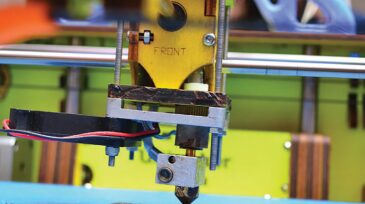
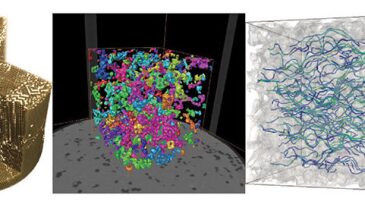
Researchers at Heriot-Watt University in Edinburgh, Scotland, are building replica core samples using 3D printers and installing sensors inside them as they go. Their goal is to directly monitor pore-scale flow behavior from the inside of these so-called “smart rocks.”
-
Autonomous underwater vehicles (AUVs) have demonstrated their capabilities during the search for Malaysian Airlines flight 370 in the Indian Ocean.
-
In an effort to foster collaboration in an area where there is currently very little, researchers at the University of Texas at Austin (UT) created a new web-based application for storing and sharing CT images of rocks.
-
Cyber threats have expanded beyond data breaches and the theft of intellectual property. Drilling and production assets are at risk of being disrupted or destroyed due to vulnerable control systems.