Data & Analytics

Proxy models are transforming reservoir management by enabling engineers to rapidly evaluate and optimize thousands of operating scenarios, helping improve CO2-EOR, carbon storage, geothermal, and underground gas storage decisions while keeping high-fidelity reservoir simulation at the core of validation.

In this interview, Sushma Bhan, energy data, AI leader, and technical director of the SPE Data Science and Engineering Analytics Technical Section, shares lessons from 3 decades at Shell, discussing digital transformation, the future of AI in upstream operations, leadership development, and career advice for the next generation of energy professionals.

Texas A&M Researchers To Develop AI-Powered Drilling System To Accelerate Critical Mineral Discovery
Backed by a $3.5 million US Department of Energy grant, Texas A&M researchers are developing an AI-enabled drilling system that can identify critical minerals in real time, reducing exploration time and costs for rare earth element deposits.
-
 In the real world, where data is messy and workflows are rarely linear, automation often fails. That's where agentic AI comes in.
 -
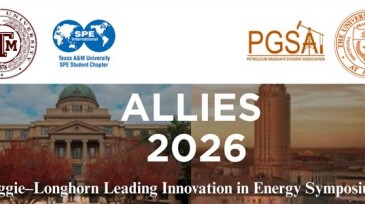
The free, 1-day symposium will bring together graduate students, faculty, and industry leaders dedicated to advancing research, career growth, and energy innovation.
-
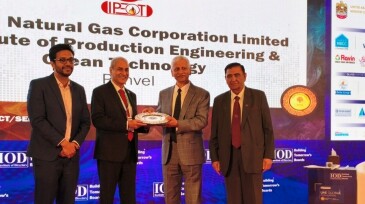
Rajiv Nischal, head of ONGC’s Institute of Production Engineering and Ocean Technology (IPEOT), shares the company's latest developments in technology, sustainability, safety, and more.
-
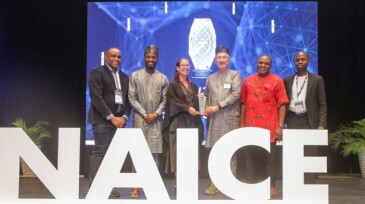
With a record-breaking number of participants, this year's datathon proved that collaboration is the catalyst, data is the tool, and innovation is the outcome.
-
David Nnamdi, SPE, speaks about his work as a data scientist and engineer, his development of Sequestrix, an open-source CO2 transport network optimization tool, and where he sees data science and AI’s role in the future of sustainable energy.
-
The fifth edition of the SPE Europe Energy GeoHackathon, beginning on 1 October, focuses on how data science can advance geothermal energy and drive the energy transition.
-
AI is beginning to transform well management by helping engineers predict electrical submersible pump failures before they happen, optimize drawdown more efficiently, and generate reliable forecasts even when data is scarce or noisy.
-
The oil and gas industry's shift to smart fields—driven by automation, AI, and real-time data—requires petroleum engineers to master digital technologies alongside traditional skills.
-
Part 1 of this series focuses on the disciplines of geology and geophysics, petrophysics, and reservoir engineering using real-world field examples from Malaysia and the author's experiences in training undergraduate students in Malaysian universities.
-
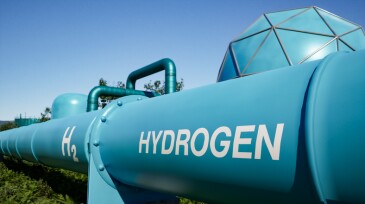
This article explores the integration of hydrogen into existing natural gas infrastructure and introduces practical solutions, including the application of machine learning models, to support decision-making and infrastructure adaptation in the energy transition.