

Digital Transformation

In an industry that rarely slows down, memory can be a powerful engineering tool. Not in terms of nostalgia, but in perspective. Many of the activities that constituted daily operations have been so deeply transformed that new generations of engineers may never have experienced them before.

This article explores how AI is transforming oil and gas operations, including its real impact on methane reduction, predictive maintenance, energy efficiency, and whether it truly delivers measurable sustainability gains or just adds complexity.
AI is evolving into a practical tool that helps geoscientists and engineers work faster, evaluate more opportunities, and manage subsurface uncertainty.
-
 Robotic submarines, capable of operating by themselves thousands of feet underwater for months or perhaps years at a time, are under development as the vanguard of tomorrow’s subsea oil and gas fields.
 -
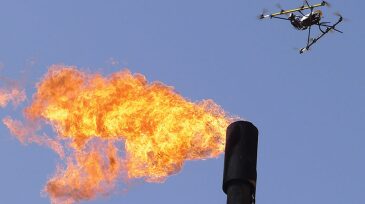
Unmanned aircraft are finding their place in the oil and gas industry by providing aerial geologic modeling to address reservoir-related challenges and making inspections safer.
-
Surya Rajan, a director at IHS Cambridge Energy Research Associates (CERA), discusses the drivers for innovation in oil and gas along with expected areas for technology development.
-
Industry has developed smart completions, smart wells, and smart fields. The next frontier is real-time reservoir management (RTRM) using all of the data from smart installations, as well as artificial intelligence.



Page 18 of 18