Digital Transformation

In an industry that rarely slows down, memory can be a powerful engineering tool. Not in terms of nostalgia, but in perspective. Many of the activities that constituted daily operations have been so deeply transformed that new generations of engineers may never have experienced them before.

This article explores how AI is transforming oil and gas operations, including its real impact on methane reduction, predictive maintenance, energy efficiency, and whether it truly delivers measurable sustainability gains or just adds complexity.

AI is evolving into a practical tool that helps geoscientists and engineers work faster, evaluate more opportunities, and manage subsurface uncertainty.
-
 The use of intelligent software is on the rise in the industry and it is changing how engineers approach problems. A series of articles explores the potential benefits and limitations of this emerging area of data science.
 -
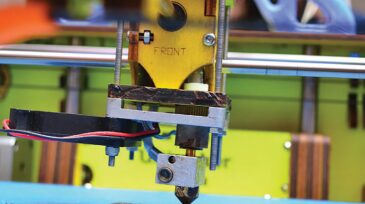
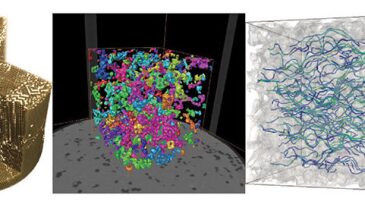
Researchers at Heriot-Watt University in Edinburgh, Scotland, are building replica core samples using 3D printers and installing sensors inside them as they go. Their goal is to directly monitor pore-scale flow behavior from the inside of these so-called “smart rocks.”
-
PetroWiki.org is a living, growing knowledge resource for oil and gas professionals, featuring more than 2,000 pages of content. Information about a topic can be easily gathered by entering the keyword in the search box.
-
Autonomous underwater vehicles (AUVs) have demonstrated their capabilities during the search for Malaysian Airlines flight 370 in the Indian Ocean.
-
In an effort to foster collaboration in an area where there is currently very little, researchers at the University of Texas at Austin (UT) created a new web-based application for storing and sharing CT images of rocks.
-
Pulled directly from the reservoir rock, core samples provide critical data used to determine how exploration should proceed. Until recently, core analysis remained old school, however, there is an ongoing transition to bring the process of core description into the digital age.
-
Case studies from around the world prove that big rewards await companies that optimize the artificial lift systems keeping their mature fields alive. The success stories involve a mix of monitoring, automation, and performance tracking.
-
Saudi Aramco is on a mission to increase the amount of seismic data that it collects by fourfold, while reducing costs and acquisition time by half of what it spends today.
-
It has been an impressive comeback for a technology that once stood on the brink of failure. The upstream oil and gas industry has largely resolved crippling technical challenges that shortened the life of fiber-optic cables in downhole applications and is now working on a big encore.
-
Some of the world’s largest exploration and production companies say the big bets they have placed on high-performance computing over the past several years are set to pay off.