HSE & Sustainability
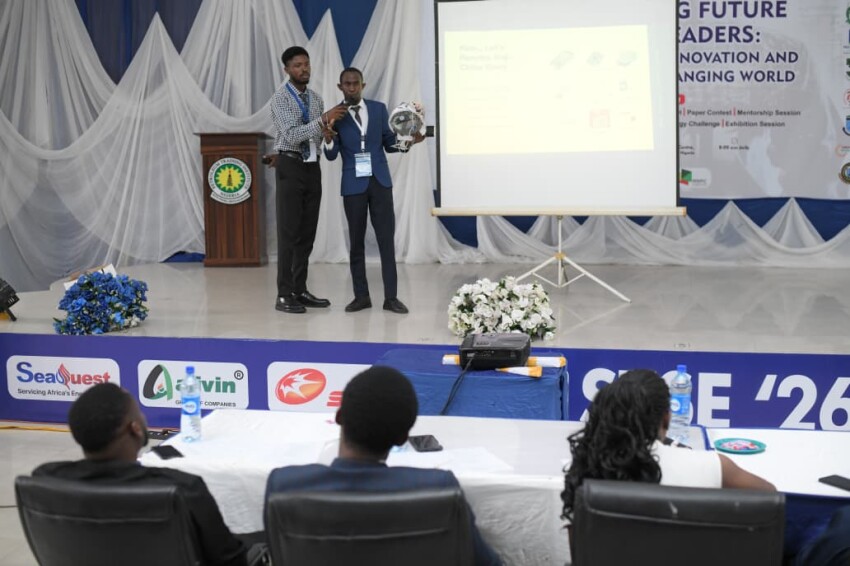
A smart safety helmet with physiological monitoring, gas detection, and real-time location tracking for emergencies was the winning concept at this year's SPE Students Technical Symposium and Exhibition.

Part two of this three-part series explores the history of 10 years, 2005 to 2014, of the UN Climate Change Conference of the Parties.

The energy transition is often portrayed as linear, but recent geopolitical tensions and market uncertainties show that the shift to a low-carbon future will be complex and shaped by multiple, interconnected pressures.
-
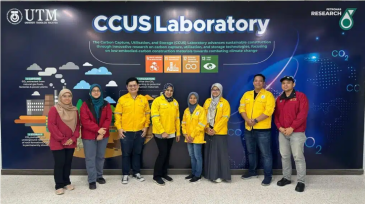
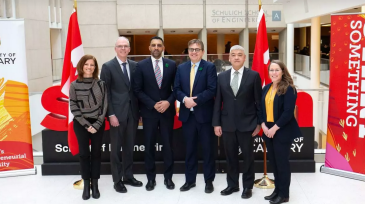
 The facility serves as a center for students, researchers, and industry experts to collaborate on innovative solutions for reducing carbon emissions in the construction sector.
 -
Researchers found that utilizing the natural heat from underground rock formations raises the temperature and pressure of the stored compressed air, allowing the system to store and release energy more efficiently.
-
The company launched an initiative with an all-women team managing the morning shift at its 100-MW Veltoor solar plant in Telangana, India.
-
Lorena Moscardelli will serve as the ninth director and first woman director since the bureau’s inception in 1909.
-
The grant from the US Department of Energy will fund the project through 2027 as two researchers focus on developing a two-step approach to treating produced water.
-
The program, set to launch in spring 2025, will offer courses in energy production and storage, AI and data science for energy transition, and energy process design.
-
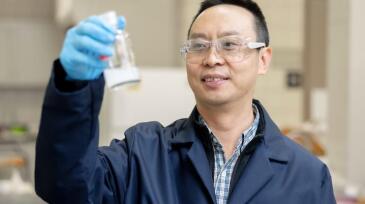
The research, aimed at safely extracting metals such as lithium, cobalt, and nickel, was awarded a $1-million grant from the US Department of Energy.
-
Two hubs were launched in September 2024 at Pembrokeshire College and Fife College with a third planned to launch in 2025 at North East Scotland College (Aberdeen).
-
In part three of the Decoding Sustainability series, Mercedes Maroto-Valer, director of the UK Industrial Decarbonization Research and Innovation Center, shares her insights on diversity and inclusion, drawing from her personal experiences and position as a leader in the field.
-
The three projects will focus on carbon capture, utilization, and storage and carbon dioxide removal.