Reservoir characterization

In part one of this two-part series, explore five underdeveloped US shale and tight-rock plays, from the Tuscaloosa Marine Shale to the Brown Dense, and discover why proven hydrocarbons and successful wells have yet to translate into repeatable unconventional development.

Proxy models are transforming reservoir management by enabling engineers to rapidly evaluate and optimize thousands of operating scenarios, helping improve CO2-EOR, carbon storage, geothermal, and underground gas storage decisions while keeping high-fidelity reservoir simulation at the core of validation.

Rock sample characterization, widely used in hydrocarbon exploration and production, is emerging as a critical tool for understanding and optimizing subsurface mineral extraction through in-situ leaching.
-
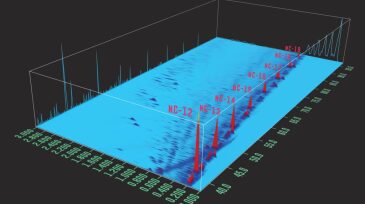
 Knowing which horizon crude oil flows from and in what proportions has been a major challenge for shale producers. Increasingly, they are turning to new technology to find the answer.
 -
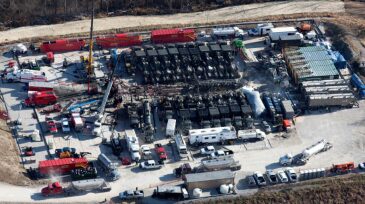
The types of advancements made in real-time drilling data acquisition and processing are now on the doorstep of the North American completions sector. Technology developers are banding together under the umbrella of “coopetition” in a bid to change the way producers fracture tight reservoirs.
-
Wireline formation tests are a critical piece of the exploration and appraisal process, yet they come with a degree of uncertainty. The supermajor has tapped a new software developer to see if it can clear things up.
-
While some try to put the two enormous oil producers toe-to-toe, the best thing to do might be to understand why they are different.
-
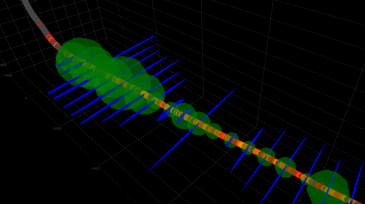
Using drilling data and a downhole acoustic signal, developers aim to assess unconventional fracture networks in real time and give engineers ability to customize each stage.
-
The upcoming event will provide the shale sector with a venue to share new learnings and approaches meant to overcome one of its greatest subsurface challenges.
-
BP has invested more than $100 million into nine different startup companies in the past 2 years—but only one of them wants to turn your brain into a piece of its software.
-
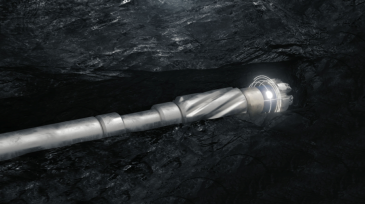
Shale explorers run very few logs into horizontal wells, making it difficult to understand the effects of reservoir depletion in tightly spaced wells. This new technology is trying to change that.
-
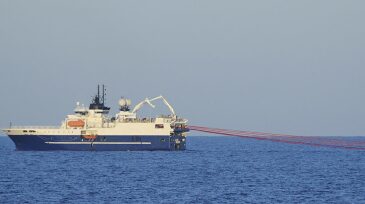
Understanding the behavior of subsea reservoirs traditionally takes months and millions of dollars. A new company says it can do this with a very targeted way in less than a week, for only thousands of dollars.
-
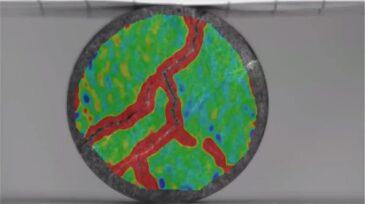
Technology that allows researchers to see stress forming inside rock samples may help unravel some of the mysteries associated with fracture behavior.