Technology

A data-driven look at fuel savings, battery degradation, and net CO2 impact over a 10-year ownership period.

In an industry that rarely slows down, memory can be a powerful engineering tool. Not in terms of nostalgia, but in perspective. Many of the activities that constituted daily operations have been so deeply transformed that new generations of engineers may never have experienced them before.
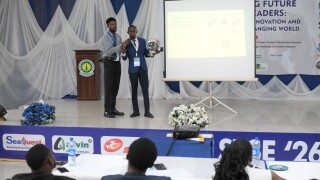
A smart safety helmet with physiological monitoring, gas detection, and real-time location tracking for emergencies was the winning concept at this year's SPE Students Technical Symposium and Exhibition.
-
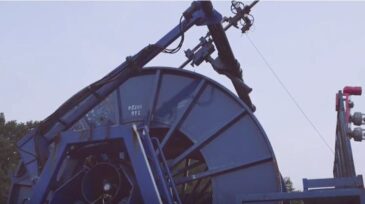
 Learn the components of a coiled tubing drilling operation and how they all fit together.
 -
Researchers at Oak Ridge National Laboratory and the University of Tennessee achieved a rare look at the inner workings of polymer self-assembly at an oil-water interface.
-
A discussion on the different types interference effects during hydraulic fracturing, focusing on cluster design and well spacing.
-
Sometimes problems turn out to be an opportunity to try something new. In this case, the result was a well design unlike anything most in the shale sector have seen before.
-
Production data from the oldest horizontal wells in the three largest oil plays in the US show that annual decline rates remain relatively high for a long period of time. This challenges assumptions held about production after 5 years and directly affects reserve and ultimate recovery estimates.
-
Extreme downhole conditions may lead to rapid degradation of pumped cement. The understanding of degradation of cement under such conditions is imperative to bring about improvements in the cement formulation.
-
OMV’s ReOil technology uses thermal cracking to transform plastic waste into gas and synthetic crude oil. The technology is expected to reach industrial scale by 2025.
-
The video shows some of the issues encountered while building the Appomattox and how the team drew on the knowledge of those outside of the oil and gas industry to overcome them.
-
Fiber-optic technologies—distributed temperature sensing and distributed acoustic sensing—have been experiencing an ever-increasing number of applications in the oil and gas industry as monitoring systems.
-
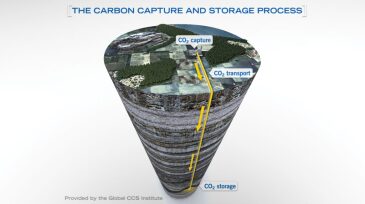
A look at the CCUS technology and its advantages, and an argument in favor of more CCUS projects.