

Directional/complex wells
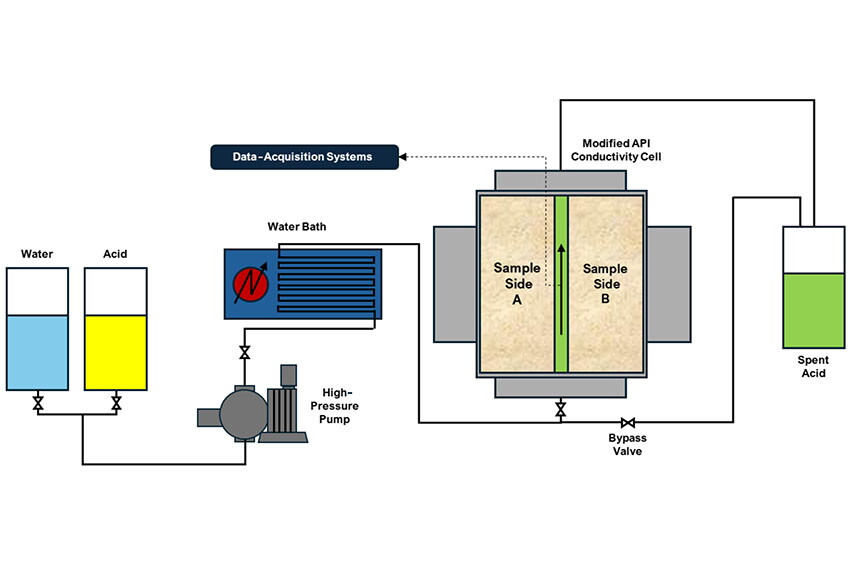
This paper presents findings reinforcing the argument that acid fracturing is a strong alternative stimulation method to improve productivity in the Austin Chalk formation.

This paper aims to assess the effectiveness of using advanced integrated production-data-analysis techniques for condensate-rich tight gas fields.

This case study from Erdos Miller outlines the use of magnetic short-hop technologies to complement the use of mud pulsers to transmit telemetry to surface.
-
 This paper presents a case study of a tool-free fishbone fracture stimulation technology using sand jetting and acidizing in openhole wells, providing a technical solution for low-permeability and complex-lithology carbonate reservoirs in the Middle East.
 -
This paper details a trial involving the deployment of a transportable coiled tubing (CT) unit capable of holding 30,000 ft of high-strength 2⅞-in. CT.
-
This paper presents a novel approach to overcoming extended-reach limitations in coiled tubing interventions by using a split-string system, demonstrating measurable improvements in reach and operational speed in laterals exceeding 3 miles.
-
This paper describes the successful deployment of flexible coiled tubing technology in an oil-producing well of the offshore Frade field in Brazil’s Campos Basin.
-
This paper establishes that the use of a dual-gradient fluid column during the running of large casing in an extreme-reach deepwater well is an effective method to overcome drag and enable the casing to reach total depth.
-
This paper presents the first global application of autonomous drilling in deepwater and the journey to reach optimal drilling parameters, integrating proprietary tools from the project’s business partners.
-
In this paper, a case study is described in which a software solution enabled prescriptive optimization of well delivery using a physics-informed machine-learning approach for predictive identification and characterization of well-construction risks.
-
SPE conference authors offer a trio of papers that blend field practice, simulation optimization, and machine-learning techniques to more-efficiently pursue the goal of longer, highly deviated wells that only grows in importance to the industry with every passing year.
-
This paper describes the integration of iterative torque/drag/buckling and hydraulic simulations for multiple tapered string combinations, the results of which guided the selection of a string configuration that deemed planned well total depths feasible.
-
Improved bit and bottomhole-assembly technologies and designs have helped turn what used to be record-breaking drilling runs into routine expectations.


Page 1 of 20