Technology

A data-driven look at fuel savings, battery degradation, and net CO2 impact over a 10-year ownership period.

In an industry that rarely slows down, memory can be a powerful engineering tool. Not in terms of nostalgia, but in perspective. Many of the activities that constituted daily operations have been so deeply transformed that new generations of engineers may never have experienced them before.

A smart safety helmet with physiological monitoring, gas detection, and real-time location tracking for emergencies was the winning concept at this year's SPE Students Technical Symposium and Exhibition.
-
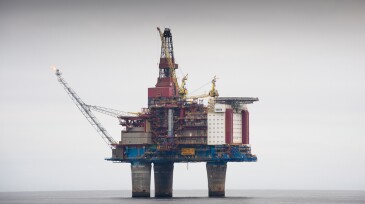
 Since the discovery of its first offshore reservoirs in the late 1950s and early 1960s, North Sea has a long and proud history in oil production and technical innovation.
 -
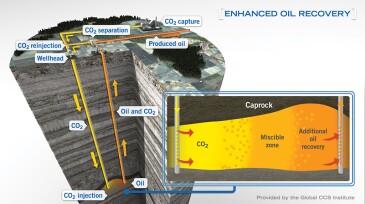
As the global economy continues to grow, carbon emissions are also projected to rise. While large-scale geothermal, nuclear, solar, and wind deployment as well as increased electrification could blunt emissions growth, net-negative carbon technologies will be needed to reach the United Nation’s two-degree target. That will require massive investment in carbon capture,…
-
This article introduces MRST-co2lab, a free and open-source module in MRST, which can be used to carry out reservoir simulations covering the whole life cycle of a CO2 project.
-
The industry is currently injecting more pore volumes of CO2 than earlier. There is more emphasis on maintaining wellbore conditions and improving sweep efficiency.
-
The use of logistic growth models can provide a simple framework to evaluate CO2 storage scale-up and constrain outputs from existing energy systems models.
-
The article describes some of the innovative technologies that have been successfully developed and deployed by Saudi Aramco's production technology department.
-
Pore-to-process simulation concept refers to coupling all production system elements such as reservoir(s), wells, pipeline network, and facilities. Pore-to-process simulation will enable several what-if scenarios evaluation, identify production bottlenecks, and optimize asset oil- and water-production rates.
-
The ability for conventional geothermal to produce both reliable power and heating/cooling is the major differentiator from other renewable forms of energy.
-
Being the academic arm of oil and gas exploration and production, petroleum engineering R&D is expected to drive the frontier in petroleum technology. This article identifies and elaborates on five fundamental technological R&D challenges in today’s upstream petroleum industry.
-
The oil and gas industry is transforming. It is vital to look at how traditional E&P companies are reforming themselves for the future energy corridor.