Technology

A data-driven look at fuel savings, battery degradation, and net CO2 impact over a 10-year ownership period.

In an industry that rarely slows down, memory can be a powerful engineering tool. Not in terms of nostalgia, but in perspective. Many of the activities that constituted daily operations have been so deeply transformed that new generations of engineers may never have experienced them before.

A smart safety helmet with physiological monitoring, gas detection, and real-time location tracking for emergencies was the winning concept at this year's SPE Students Technical Symposium and Exhibition.
-
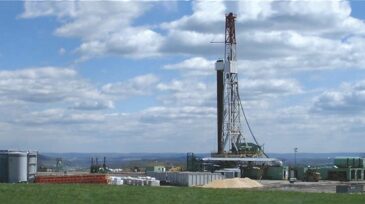
 The rapid development of shale formations over the past decade has led the United States to become the world’s undisputed leader in natural gas production.
 -
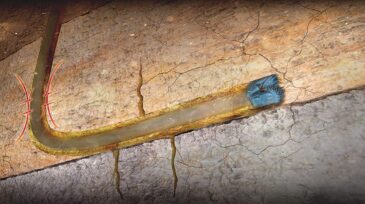
Making hole has become a more difficult and complex operation as operators move into untapped horizons, especially deepwater and unconventional fields.
-
In April, downhole chemical technology provider Flotek Industries acquired water-based, drilling fluid-additive technology from ARC Drilling Fluids.
-
Before many of the new chemical and nanoparticle technologies for wellbore strengthening arrived to the marketplace, casing while drilling (CWD) was used for more than a decade to mechanically achieve the same end.
-
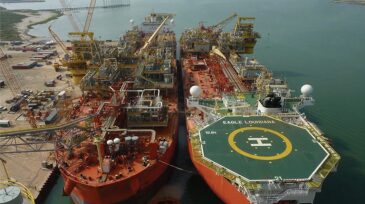
In response to the 2010 Deepwater Horizon incident that claimed the lives of 11 men and led to the worst oil spill in United States history, the offshore industry devised new technologies and methods that would allow for a quicker response in the US Gulf of Mexico.
-
Upstream separation processes remain a hot topic for facilities engineers. Striving to design separators with the optimal sizing for a variety of reservoir conditions, increasing water cuts, and dynamic gas/oil/water production characteristics is critical, but challenging.
-
The authors tell you how hydraulic submersible pumps work and how they're different froom other types of artificial lift.
-
How to understand the complexities of unconventional reservoirs.
-
The offshore industry has taken another step toward opening up new deepwater frontiers to exploration with Maersk Drilling ordering the first 20,000-psi blowout preventer (BOP) made by GE Oil and Gas.
-
Downhole fiber-optic systems work by using a small laser that fires off a pulse of light through hair-thin cables made of silica glass.