Technology

A data-driven look at fuel savings, battery degradation, and net CO2 impact over a 10-year ownership period.

In an industry that rarely slows down, memory can be a powerful engineering tool. Not in terms of nostalgia, but in perspective. Many of the activities that constituted daily operations have been so deeply transformed that new generations of engineers may never have experienced them before.
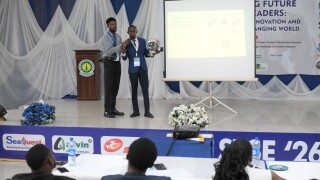
A smart safety helmet with physiological monitoring, gas detection, and real-time location tracking for emergencies was the winning concept at this year's SPE Students Technical Symposium and Exhibition.
-
 Consultant Ali Daneshy presents an overview of hydraulic fracturing technology.
 -
Christine A. Ehlig-Economides discusses what a career in pressure-transient testing is like.
-
The petroleum industry constantly faces challenging flow-assurance problems as it pursues assets in more difficult producing environments. This alone guarantees an exciting future for all engineers with an interest in multiphase flow in pipes.
-
Steam-assisted gravity drainage (SAGD) is a prime example of how structured research and development (R&D) has led to the commercial implementation of technology, helping unlock hydrocarbon resources to fulfill society’s energy demands.
-
The development of wireline-tractor technology has greatly improved the way operators can intervene in high-angle and horizontal oil and gas wells
-
Sugar is widely recognized as a cement retarder by the drilling industry and has been used in cementing operations where cement returns are expected on surface. Experts disagree about the effect that sugar has on cement slurries, a few believe that it acts as both an accelerator and a retarder depending on the concentration, but the majority believe that the sugar act…
-
Abbas Firoozabadi of the Reservoir Engineering Research Institute and Yale University and Hussein Hoteit of ConocoPhillips engage in an interesting review of traditional (“old school”) numerical-simulation approaches and explain the need to change (to “new school”) reservoir-simulation approaches.
-
Paul Tooms talks about his career, subsea technology, and how the industry develops its people.
-
Brian J. Glass and Carol Stoker of the NASA Ames Research Center describe the potential for drilling on other planets.
-
TWA Editor Tony Thomas discusses peak oil and what technologies can delay it.