Data & Analytics

Proxy models are transforming reservoir management by enabling engineers to rapidly evaluate and optimize thousands of operating scenarios, helping improve CO2-EOR, carbon storage, geothermal, and underground gas storage decisions while keeping high-fidelity reservoir simulation at the core of validation.

In this interview, Sushma Bhan, energy data, AI leader, and technical director of the SPE Data Science and Engineering Analytics Technical Section, shares lessons from 3 decades at Shell, discussing digital transformation, the future of AI in upstream operations, leadership development, and career advice for the next generation of energy professionals.

Texas A&M Researchers To Develop AI-Powered Drilling System To Accelerate Critical Mineral Discovery
Backed by a $3.5 million US Department of Energy grant, Texas A&M researchers are developing an AI-enabled drilling system that can identify critical minerals in real time, reducing exploration time and costs for rare earth element deposits.
-
 Video games have been seen as a big waste of time for years by parents around the globe. But now, the oil and gas industry sees the underlying technology as a big time saver.
 -
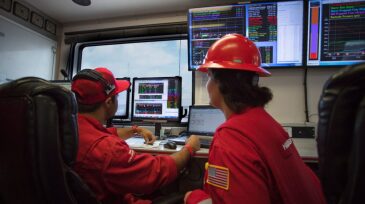
The pressure pumping giant turns to algorithms to get better fractures and fewer problems.
-
Well-interference issues can be hard to diagnose, but this startup may be figuring that out. The data-driven process it developed can also help operators come up with more effective ways to use diverters.
-
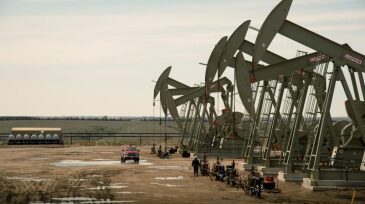
Hundreds of rod-lift wells in North Dakota are about to get a big upgrade.
-
A recent research effort has shown that the digital journey is full of stumbling blocks. Just like humans, advanced computing technology will get some things right and some things wrong.
-
The company behind the world’s most popular search engine is trying to click with the upstream business at the most distinguished technical event of the year.
-
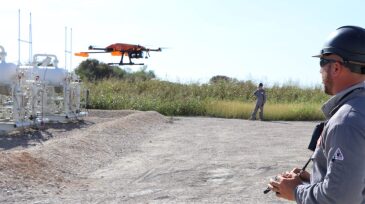
Venture groups spend their time evaluating hundreds of companies each year to only make a handful of investments. These two cover interesting ends of the upstream spectrum: aerial drones and downhole artificial lift.
-
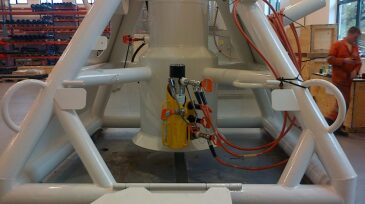
Acquiring data from an abandoned subsea well has been done before, but never quite like this.
-
Wearable computers are turning heads in the oil and gas industry and appear to be on a trajectory for widespread adoption.
-
Data story consumers are focused on summarized results and highlights instead of details of the analysis. It’s a data scientist’s responsibility to identify the significance of the data and to present it in a simple but scientific manner.