Data & Analytics

Operational drift in oil and gas starts with small, undocumented deviations that compound over time, making real-time visibility, digital workflows, and frontline execution data critical for preventing safety incidents, compliance failures, and costly operational disruptions.

Discover how AI and machine learning are transforming oil and gas field development by reducing subsurface uncertainty, optimizing development decisions, and maximizing long-term reservoir value from concept selection through production.

As upstream operators move beyond isolated experiments, the hardest part of the AI journey is not building a model, it is making it stick.
-
 While sidetracking your career path is not an easy journey, the skills and knowledge gained in petroleum engineering education can be applied in other industries during the downturn.
 -
Many cybersecurity experts think the global malware attack on 27 June may have been an initial test run of a hybrid creation. If the term “wiper” is unfamiliar, you need to read this.
-
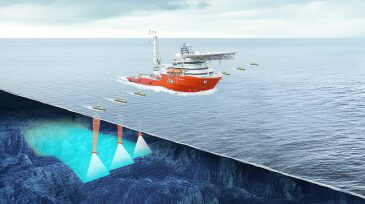
AUVs aren’t limited to inspections and pipeline surveys. Deployment of a flotilla of AUVs to work on a project, and the communication among them, may someday lead to a subsea Internet of Things.
-
Honeypots and pen testers. If these terms are unfamiliar, you’ll want to learn their roles in the safekeeping of critical evaluation and operational data in oil and gas activities, from the reservoir to the well pad to pipelines.
-
Always recorded but almost never used, the water hammer signal could offer completions engineers another set of insightful data if petroleum engineers can crack its code.
-
Figuring out the right price for an active oil and gas field is tricky business in the shale sector but one producer explains how it uses data analytics to get a clearer picture.
-
Permian Basin producer Callon Petroleum is attributing its data-driven approach to a routine completions practice to improved proppant placement and higher oil production.
-
The oil and gas industry has a lot to gain from the adoption of big data analytics as recently highlighted examples from major service company Halliburton demonstrate.
-
Through data gathering, machine learning, and the use of a supercomputer, a non-profit organization in Texas is seeking to boost oil and gas production on land owned by the states’ two largest university systems.
-
A look at the universities, startups, and multinational corporations in Silicon Valley, California, which are applying data science and predictive modeling for oilfield management.