HSE & Sustainability

Learn how a five-step decision framework helps refineries select the right H2S removal technology by balancing compliance, risk, complexity, and cost.

Students from around the globe are invited to participate in the 2026 Switch Global Case Competition to tackle the pressing issue of energy poverty and compete for $50,000 in prize money.

A data-driven look at fuel savings, battery degradation, and net CO2 impact over a 10-year ownership period.
-
 The researchers found that adding nutrients such as nitrogen initially boosted soil carbon storage in previously tilled croplands and that these carbon gains persisted for decades even after fertilization and tilling stopped.
-
Emerson and HeroX are teaming up to award $60,000 in prize money to inventive thinkers who develop next-generation solutions to advance flow-measurement technology in critical industrial systems.
-
Assistant Professor Lori Tunstall received more than $1 million from the Gordon and Betty Moore Foundation to explore how municipal waste can be converted into biochar to replace cement in concrete.
-
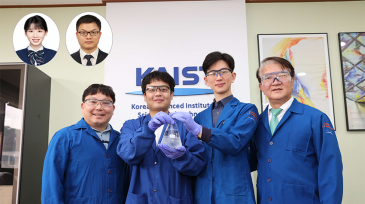
Researchers at KAIST developed an integrated chemobiological platform that converts renewable feedstocks like glucose and glycerol into essential aromatic hydrocarbons (BTEX) using engineered E. coli strains and a solvent-integrated catalytic process, offering a sustainable alternative to petroleum-based production.
-
The two projects under the university’s Targeted Proposal Teams program will focus on underground hydrogen and geologic storage solutions.
-
Researchers at Colorado School of Mines explore an internally deployed fiber-optic distributed acoustic sensing (DAS) method for continuous gas-pipeline monitoring, demonstrating its potential to improve leak detection, enable early intervention, and enhance overall pipeline-integrity management compared to conventional inspection techniques.
-
The curriculum covers topics such as geochemical and technological removal methods, life cycle assessments, and storage solutions.
-
Effective management of produced water in mature oil fields is essential to reducing environmental risks and operational costs, with subsurface disposal emerging as the most efficient and responsible method.
-
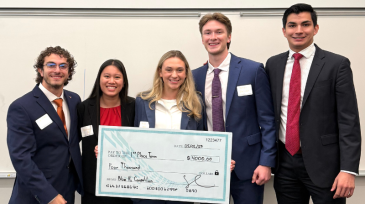
A team from UT Austin won the Blue Hydrogen Student Design Competition, where more than 200 students from three Texas universities designed sustainable hydrogen production processes.
-
The upcoming webinar will explore how oil and gas technologies are being repurposed for geothermal and renewable energy applications.